
Simultaneous Interpretation for Conferences
Plan simultaneous interpretation for conferences with qualified interpreters, clear audio, and language access that keeps every attendee engaged all day.
Read more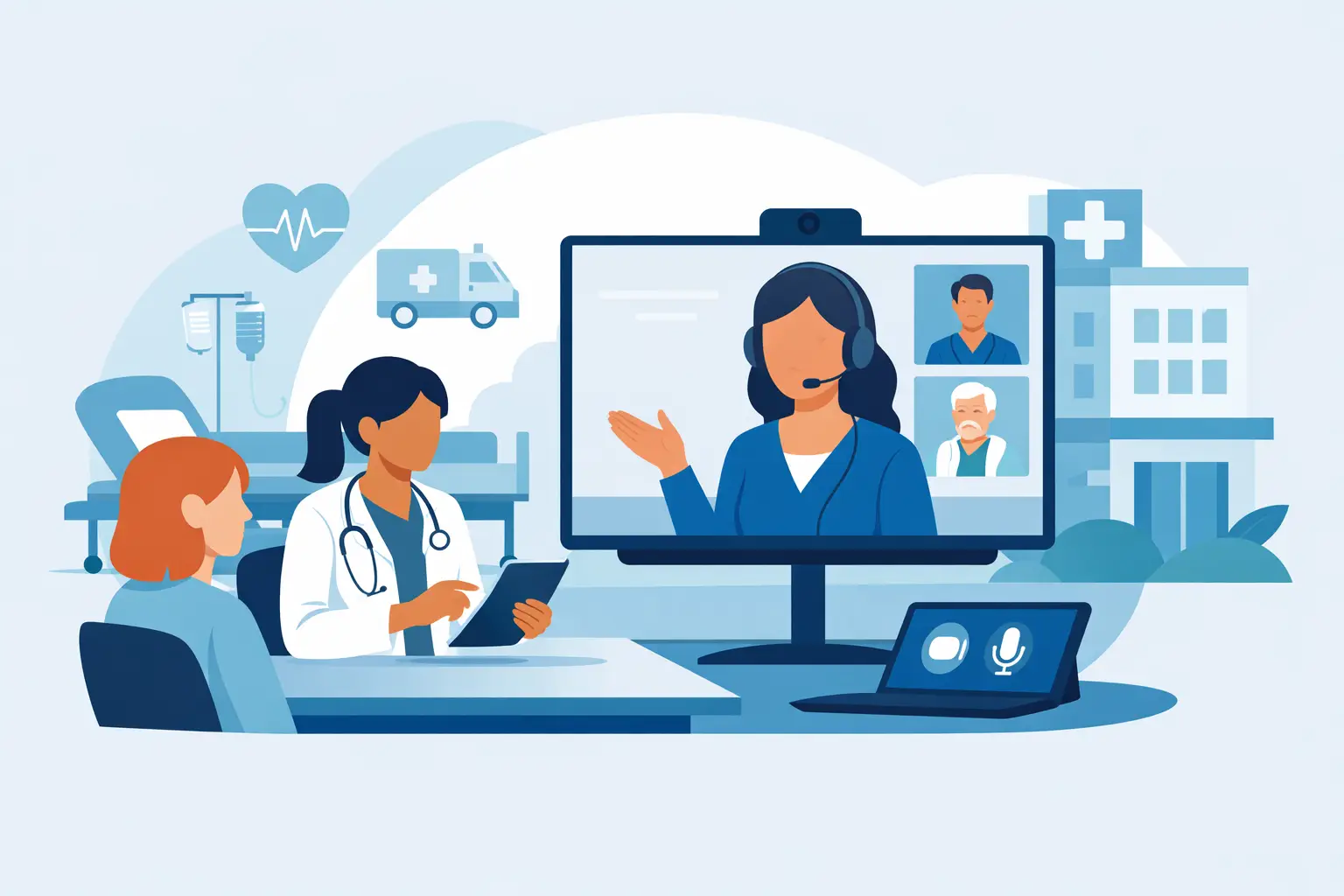
A patient arrives in the emergency department with chest pain, speaks limited English, and needs to understand what happens next. Waiting for an on-site interpreter may not be practical. Asking a family member to interpret can compromise accuracy and privacy. Video remote interpretation for hospitals gives care teams a faster, more appropriate way to connect patients with qualified medical interpreters when clear communication cannot wait.
For hospitals, language access is not simply a service feature. It supports informed consent, patient safety, treatment adherence, and equitable care. The right video interpreting program helps clinicians communicate in the moment while respecting the patient’s language, culture, and confidentiality.
Video remote interpretation, often called VRI, connects a patient and care team with a live professional interpreter by secure video connection. The interpreter may be working from another location, but can see and hear the conversation and interpret in real time.
In a hospital setting, VRI can be delivered through a tablet, mobile cart, desktop computer, or other approved device with a camera, microphone, and reliable internet connection. It is useful across emergency departments, inpatient units, outpatient clinics, surgical centers, behavioral health programs, maternity care, discharge planning, and telehealth visits.
The visual component matters. Unlike telephone interpretation, video allows the interpreter to observe facial expressions, gestures, and the interaction between clinician and patient. That added context can be especially helpful when explaining a procedure, assessing symptoms, discussing a care plan, or working with patients who use sign language.
VRI is not intended to replace every on-site interpreting need. Some conversations are too complex, lengthy, sensitive, or visually demanding for remote delivery. A strong hospital language-access plan gives staff more than one option and helps them select the right format for the encounter.
The most immediate benefit is access. Hospitals serve patients who speak many languages, often at unpredictable times. Maintaining on-site coverage for every language and every shift is rarely realistic. Video interpreting expands access to qualified interpreters without requiring a specialist to be physically present at each facility.
This can reduce delays during admissions, triage, diagnostic conversations, care coordination, and discharge. It also helps hospitals respond more effectively when a patient speaks a language that is less common in the local area. A quick connection is valuable, but quality should remain the priority. The interpreter must understand medical terminology, follow professional ethics, and communicate accurately in both languages.
VRI also supports privacy. Patients may hesitate to discuss symptoms, medications, immigration concerns, mental health, reproductive health, or family issues through a relative or friend. A professional interpreter provides a neutral communication channel and follows confidentiality requirements. Hospital staff should not depend on minors, visitors, or untrained bilingual employees for medical interpretation except in a true emergency when no qualified interpreter is available.
Emergency and urgent care teams often benefit from rapid video access because language needs arise without notice. A qualified interpreter can help staff gather a more complete history, explain testing, and confirm that the patient understands next steps.
For inpatient care, VRI supports daily rounds, medication discussions, specialty consultations, and family updates. It can also prevent small misunderstandings from building over several days of treatment. When patients can ask questions in their preferred language, they are better positioned to participate in decisions about their care.
Discharge is another high-impact use case. Instructions about prescriptions, wound care, follow-up visits, warning signs, diet restrictions, and equipment need to be understood, not merely delivered. An interpreter can help the care team use teach-back, asking the patient to explain the plan in their own words so gaps can be addressed before they leave.
Behavioral health and end-of-life conversations require added judgment. Video may work well when the patient is comfortable with the format and the connection is private and stable. In other cases, an on-site interpreter may be the better choice because rapport, emotional cues, and prolonged discussion are central to the encounter.
A hospital should look beyond the availability of a video platform. The service behind the screen determines whether the encounter supports safe, respectful care. Medical interpreters need demonstrated language proficiency, healthcare knowledge, and training in interpreter ethics and confidentiality.
Availability is equally important. Ask which languages are offered, how quickly interpreters can be reached, and whether the provider can support scheduled appointments as well as urgent requests. A hospital serving a broad community needs coverage that reflects its patient population, including less commonly requested languages.
Technology should fit clinical reality. The platform needs clear audio and video, a simple process for staff, and dependable support when a device or connection fails. It should also align with the hospital’s privacy and security requirements. Before selecting a provider, involve clinical leadership, information technology, compliance, patient experience, and frontline users in the evaluation.
Hospitals should also ask how interpreter quality is monitored. Useful measures can include connection times, completed sessions, cancellation patterns, language availability, user feedback, and any concerns raised by patients or clinicians. Data can reveal where training, additional devices, or a different coverage model is needed.
Even an excellent VRI service will fall short if staff do not know when or how to access it. The workflow should be clear from registration through discharge. Staff need a simple way to identify a patient’s preferred language, request an interpreter, document the encounter when required, and escalate to an on-site option when VRI is not appropriate.
Training should cover more than turning on a device. Clinicians benefit from practical guidance: speak directly to the patient, use short segments of speech, avoid jargon when possible, pause for interpretation, and allow time for questions. The interpreter interprets the conversation; the clinician remains responsible for the medical discussion, decisions, and patient care.
Device placement affects the experience as well. The patient should be able to see the interpreter clearly, and the interpreter should be able to see the patient and relevant speakers. Avoid positioning the screen across the room or in a noisy hallway. For discussions involving private information, confirm that the setting protects confidentiality before beginning.
It is also wise to create a backup process. Wi-Fi interruptions, depleted batteries, poor acoustics, and competing device demand happen in active care environments. Telephone interpretation, an alternate device, or a rapid path to on-site support can keep communication moving when video is unavailable.
VRI offers flexibility, but it is not always the best fit. An on-site interpreter may be preferable for complex procedures, labor and delivery, extended family meetings, serious diagnoses, lengthy rehabilitation sessions, or situations where a patient has difficulty seeing, hearing, using technology, or engaging through a screen.
American Sign Language interpretation requires particular planning. Video may be appropriate for some encounters when video quality, camera framing, and connectivity are strong. For other situations, especially when visual access is limited or the conversation is prolonged, an on-site interpreter can provide a better experience.
The goal is not to force every interaction into one delivery method. It is to give each patient meaningful access to communication that fits the clinical situation.
When hospitals treat interpreting as part of care delivery rather than an afterthought, patients notice. They can describe what they feel, understand their choices, and leave with clearer instructions. Clinicians gain information they need to make better decisions and build trust with the communities they serve.
Lenguae helps healthcare organizations arrange professional medical interpretation across video, telephone, and on-site formats, with qualified language support designed for time-sensitive, confidential settings. A thoughtful VRI program can start with a single department, but its real value appears when every patient knows their voice will be heard.
Send us your documents
now and we will get back to
you with a free quote!
"The methodology, material and excellent teachers make Lenguae the best option for the personalized of English, as the learning.”

Plan simultaneous interpretation for conferences with qualified interpreters, clear audio, and language access that keeps every attendee engaged all day.
Read more
Clinical trial document translation supports accurate protocols, informed consent, safety reporting, and global study coordination without costly delays.
Read more
Medical records translation for patients protects clarity, privacy, and continuity of care when health information crosses languages and borders safely.
Read more
Learn how to translate legal contracts with accurate terminology, certified review, confidentiality safeguards, and a workflow built for deadlines safely.
Read more
Choose a qualified court interpreter for legal proceedings to protect rights, preserve confidentiality, and ensure clear, accurate testimony in court.
Read more
Lenguae aims to teach language in a comprehensive way. With our courses, you will learn to understand and express yourself in both in writing and speaking, while also getting in touch with the culture of the countries that speak the language you’re learning. All our teachers are experienced in language teaching, being either native speakers or having lived abroad.
Career at Lenguae
