
Asylum Translation Example: What a Good One Shows
See what an asylum translation example should include, from translator certification to faithful wording, dates, seals, and document formatting for USCIS.
Read more
A missed instruction during a medical appointment, deposition, or benefits interview can change more than the tone of a conversation. It can affect care, due process, compliance, and trust. The choice between remote versus onsite interpreting should therefore begin with the stakes of the interaction, not simply the calendar or travel budget.
Both formats can give limited-English-proficient participants meaningful access to essential information when delivered by qualified, sector-appropriate interpreters. The right choice depends on what must be communicated, who is involved, what technology is available, and how much visual context matters. A practical assessment helps organizations provide language access without adding unnecessary cost or delay.
Remote interpreting connects an interpreter by phone or secure video platform. It is often the fastest way to arrange support for scheduled and unplanned conversations, especially when the requested language is less common or participants are in different locations. Video remote interpreting allows the interpreter to see speakers, documents, gestures, and some elements of the setting. Over-the-phone interpreting is audio-only and can be especially useful when immediate access matters most.
Onsite interpreting places the interpreter physically in the room. This format is often preferred for lengthy, highly sensitive, emotionally complex, or document-intensive interactions. An onsite interpreter can better observe speakers, manage turn-taking, and respond to the practical dynamics of a courtroom, clinical exam room, school meeting, construction site, or conference venue.
Neither model is automatically more accurate. Accuracy depends on interpreter qualifications, preparation, language pairing, audio quality, the ability of participants to communicate clearly, and the interpreter’s familiarity with the subject matter. The delivery format should support those conditions rather than work against them.
Remote service is a strong option when speed, geographic reach, and flexibility are central to the request. A hospital may need a qualified interpreter quickly for an unexpected admission. A Connecticut employer may need to include employees located in several states. An immigration attorney may need an interpreter for a client consultation when travel would delay a filing. In these situations, remote access can keep communication moving.
Video interpreting works particularly well for consultations, intake calls, follow-up appointments, virtual hearings where permitted, employee meetings, parent conferences, and case-management discussions. Seeing facial expressions and body language adds context that a telephone call cannot provide. It also allows the interpreter to identify who is speaking and flag when a document or visual item needs clarification.
Remote interpreting can also reduce total project cost. There is no travel time, mileage, parking, or minimum onsite engagement to consider. For short interactions or distributed teams, those savings can be meaningful. It broadens access to interpreters in specialized languages and fields without limiting a client to who happens to be nearby.
That convenience has conditions. The organization needs dependable audio, a private setting, an appropriate platform, and a clear plan for sharing documents. A poor connection can cause speakers to repeat themselves, interrupt one another, or miss a critical qualification. For confidential healthcare, legal, government, and human resources matters, the platform and process must also protect sensitive information.
Participants often assume that remote interpreting requires less coordination. In practice, it benefits from a few deliberate habits. Speakers should use short, complete statements and pause for interpretation. Everyone should identify themselves before speaking when multiple people are on the call. Documents should be provided in advance when possible, particularly when terminology or names must be rendered precisely.
A bilingual staff member should not be asked to fill the role unless they are qualified for the assignment. Conversational ability does not prepare someone to interpret informed consent, legal advice, disciplinary action, or technical instructions accurately and impartially. A professional interpreter follows role boundaries and helps preserve clarity for all parties.
Onsite interpreting is often worth the additional planning when the conversation is complex, extended, or difficult to manage through a screen. Consider a medical exam involving physical demonstrations, a legal deposition with multiple exhibits, a special education meeting, a workplace investigation, or a high-level negotiation. In these settings, the interpreter’s ability to observe the room and respond to changing dynamics can support clearer communication.
Visual and environmental context matters more than many organizations expect. An onsite interpreter can see a clinician point to an area of concern, follow a witness as they reference an exhibit, or recognize that a participant is confused but reluctant to interrupt. They can also help maintain orderly communication in a room with several speakers, without becoming an advocate or participant in the discussion.
For conferences, trainings, public meetings, and corporate events, onsite interpreting may be required by the program design. Simultaneous interpretation can support multilingual audiences in real time, while consecutive interpretation may suit smaller presentations, facility tours, negotiations, and interviews. The right approach depends on the agenda, audience size, room layout, equipment, and desired pace.
Onsite service does require lead time, especially for specialized subject matter or less commonly requested languages. Event organizers should account for travel, scheduling, breaks, equipment, security procedures, and interpreter team requirements for long assignments. A single interpreter should not be expected to maintain the same level of concentration indefinitely during demanding work.
Some organizations default to onsite service because that is how they have always handled language access. Others default to remote service because it appears less expensive. Both approaches can create avoidable problems when they overlook the purpose of the interaction.
Start by considering the consequences of misunderstanding. A routine scheduling call may work well by phone. A discussion of surgical risks, a sworn statement, or a meeting that could affect a student’s services may call for video or onsite support, depending on the circumstances. The higher the risk, the more important it becomes to evaluate interpreter specialization, privacy, preparation, and communication conditions.
Next, consider whether visual information is essential. If the speaker is demonstrating a process, reviewing forms, reacting to evidence, or communicating through nonverbal cues, video or onsite interpreting is usually preferable to audio-only service. If the conversation is brief and visual context is limited, telephone interpreting may be the most efficient option.
Finally, consider participant access. An onsite interpreter is not useful if a rural office cannot schedule one promptly. A video connection is not equitable if the participant lacks a device, privacy, bandwidth, or comfort using technology. A client-centered language plan accounts for the actual setting and offers a workable alternative when one format creates a barrier.
The best interpreting assignments begin before anyone starts speaking. Share the appointment purpose, expected duration, languages needed, participant roles, and any relevant terminology with the language provider. For legal or technical matters, advance materials such as agendas, glossaries, nonconfidential exhibits, or presentation slides allow the interpreter to prepare accurately.
Set expectations with staff as well. Speak directly to the person receiving services, not to the interpreter. Use plain language where possible, avoid jargon that is not necessary, and allow enough time for interpretation. Ask the participant to explain key information in their own words when confirmation is needed, rather than asking only, “Do you understand?”
Privacy must be built into the process. Reserve a quiet room for remote calls, avoid using speakerphone in shared areas, and verify that the selected technology meets the organization’s confidentiality requirements. Onsite sessions need privacy planning too, particularly in healthcare, legal, and human resources environments where conversations cannot be overheard.
Many organizations need both remote and onsite interpreting, not a single permanent choice. A healthcare system might use phone or video interpreting for urgent coverage, then schedule onsite support for complex appointments. A law firm may conduct remote client consultations while arranging onsite interpretation for a deposition or trial preparation session. A university may host virtual advising appointments and provide onsite interpreters for orientation and major events.
Working with one experienced language partner can make that flexibility easier to manage. Lenguae helps clients match qualified interpreters and delivery methods to the assignment, with attention to subject-matter terminology, confidentiality, scheduling, and the language needs of each participant.
The practical question is not whether remote or onsite interpreting is universally better. It is whether every person in the conversation can understand, participate, and make informed decisions with confidence. When the format is chosen around that outcome, language access becomes a dependable part of service rather than a last-minute obstacle.
Send us your documents
now and we will get back to
you with a free quote!
"The methodology, material and excellent teachers make Lenguae the best option for the personalized of English, as the learning.”
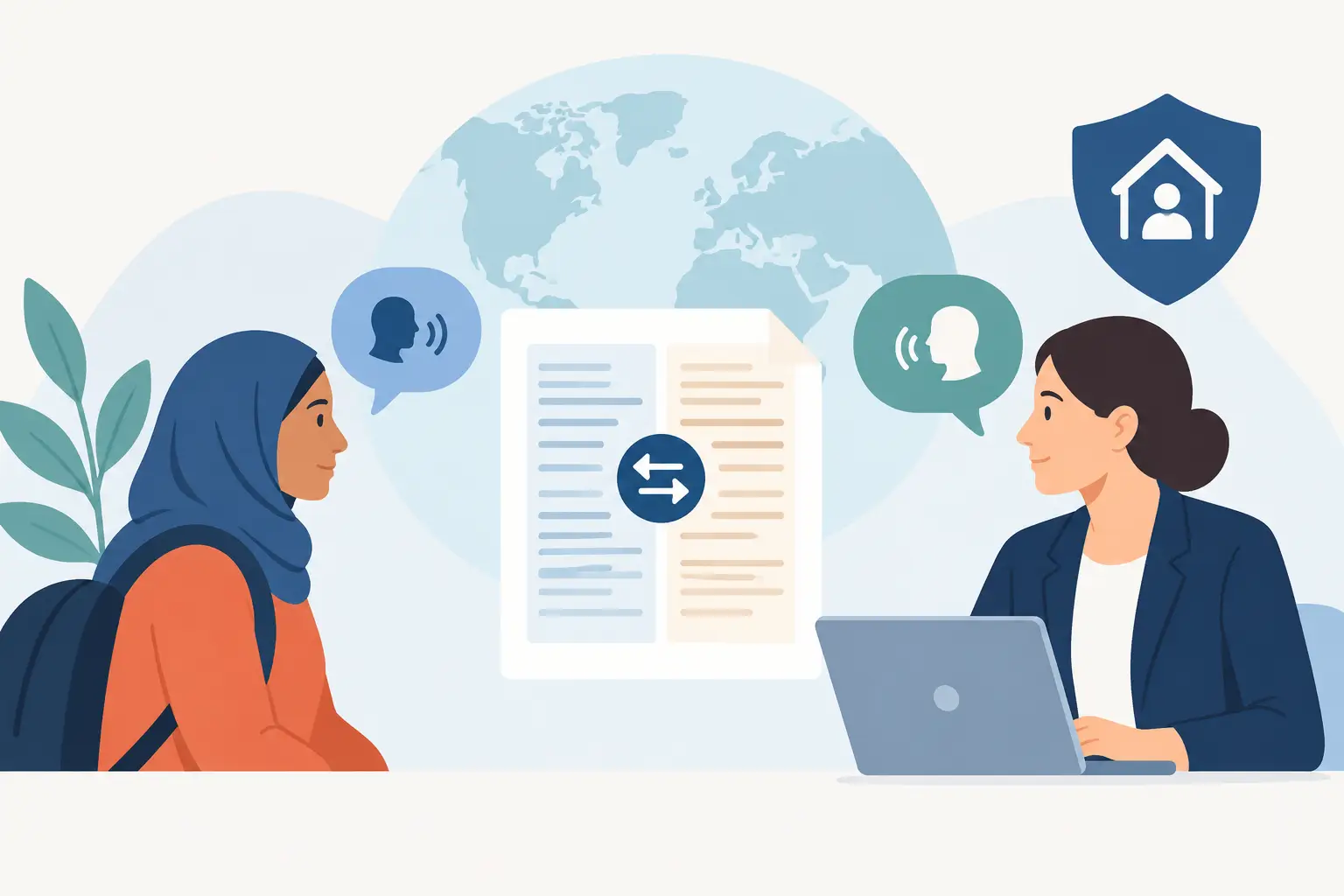
See what an asylum translation example should include, from translator certification to faithful wording, dates, seals, and document formatting for USCIS.
Read more
A legal deposition interpreter protects accurate testimony, confidentiality, and due process across languages. Learn what deposition support requires.
Read more
Learn how to request language interpretation with the right format, language, timing, and context for clear, confidential communication across settings.
Read more
Phone interpretation services give healthcare, legal, and government teams fast, confidential language support when a qualified interpreter is needed now.
Read more
Choose the best medical translation providers with confidence. Learn what protects patient safety, supports compliance, and keeps every records clear.
Read more
Lenguae aims to teach language in a comprehensive way. With our courses, you will learn to understand and express yourself in both in writing and speaking, while also getting in touch with the culture of the countries that speak the language you’re learning. All our teachers are experienced in language teaching, being either native speakers or having lived abroad.
Career at Lenguae
