
A Guide to Contract Translation Workflows
This guide to contract translation workflows helps legal, business, and public-sector teams protect meaning, confidentiality, deadlines, and compliance.
Read more
A missing translation certificate, an omitted stamp, or one mistranslated date can slow an immigration case when time already feels limited. Knowing how to translate immigration forms means understanding what must be translated, what must remain in English, and what a complete certified translation should include before you submit anything.
For US immigration matters, accuracy is not simply about making a document readable. Your translated materials must allow USCIS, an attorney, a consulate, or another reviewing authority to understand the original document fully and confidently. That includes handwritten notes, seals, marginal remarks, stamps, and other details that can appear minor but may matter in a legal record.
USCIS forms are issued in English and should generally be completed and submitted in English. Do not create a translated version of an official USCIS form and submit it in place of the English form. If an applicant needs help understanding a form in another language, a qualified translator or interpreter can explain the questions, but the completed filing should follow the agency’s current English-language requirements.
What often needs translation are the supporting documents submitted with the application or petition. These can include birth certificates, marriage certificates, divorce decrees, police certificates, passports, academic records, medical documentation, financial statements, employment letters, court records, affidavits, and evidence of a relationship or shared residence.
The requirement is broader than many applicants expect: documents written wholly or partly in a foreign language generally need a full English translation. A document that is mostly English but contains a foreign-language seal, handwritten annotation, or official notation may still need that content translated. When in doubt, translating the full document is usually safer than submitting a partial rendering that leaves questions unanswered.
The practical process begins with a clear, complete copy of every page. Scan originals at a readable resolution, including blank backs when they contain a stamp, page number, or notation. Avoid cropped photos or screenshots that cut off borders and seals. A translator cannot accurately translate information that is unreadable or missing.
Next, determine the recipient’s rules. USCIS typically requires a full English translation accompanied by a certification from the translator affirming that the translation is complete and accurate and that the translator is competent to translate from the foreign language into English. A court, foreign consulate, state agency, or university may apply additional requirements, so the correct approach can depend on where the documents will be submitted.
A professional translator should reproduce the document’s structure in a logical way. The translation does not need to mimic every visual detail perfectly, but it should clearly identify headings, entries, stamps, signatures, seals, and handwritten text. If a word or mark cannot be read, the translator should identify it appropriately rather than guessing.
For example, a birth certificate translation should preserve names, dates, places, registry numbers, parental details, annotations, and issuing authority information. If the certificate includes an official seal that is partly illegible, the translation should note that rather than silently leaving it out. This gives the reviewer a complete and transparent record.
Immigration documentation often contains variations in spelling, name order, transliteration, and date formats. The translation should accurately reflect the source document, not “correct” it to match another record. If a passport spells a name differently from a birth certificate, that inconsistency may need to be explained elsewhere in the immigration filing, but it should not be changed inside the translation.
Dates deserve the same care. A date written as 04/05/2010 can mean different things in different countries. A skilled translator can render it clearly in an unambiguous US format, such as April 5, 2010, while remaining faithful to the original. This prevents avoidable confusion about births, marriages, travel, employment, or legal events.
A complete translation includes more than the main body of a document. Reviewers may need to understand embossed seals, stamps, registration codes, official annotations, checkboxes, marginal notes, and handwritten amendments. If a document includes a stamp reading “certified copy,” that language should appear in the English translation.
This is one reason machine translation is a risky choice for immigration filings. Automated tools can be useful for informal understanding, but they may miss text in images, misread handwriting, mishandle legal terminology, or produce inconsistent names and dates. They also do not provide the professional certification needed for many filings. Sensitive records should not be uploaded to public translation tools, where confidentiality and data handling may be unclear.
For USCIS submissions, the translation should be accompanied by a signed certification. The certification is normally prepared by the translator or translation provider and should state that the translation is complete and accurate and that the translator is competent to translate between the relevant languages.
A straightforward certification generally includes the translator’s name, signature, date, contact information, language pair, and a statement similar to the following:
> I certify that I am competent to translate from [source language] into English and that the attached translation is complete and accurate to the best of my knowledge and belief.
The certification should be attached to the translated document, along with a copy of the original-language record. Keep the files together in a clear order: original document, English translation, and certification. This makes the reviewing officer’s job easier and reduces the risk that pages become separated during submission.
Notarization is a separate issue. USCIS does not generally require translations to be notarized simply because they are translations. However, a particular court, consulate, employer, school, or government office may request notarization or a different format. Never assume that a notarized document is automatically a certified translation, or that certification automatically satisfies a recipient’s notarization rule. Ask the receiving organization what it requires.
The right translator is not merely fluent in two languages. Immigration records combine legal, civil, medical, educational, and financial terminology, often across different national systems. A translator should understand how to handle names, official titles, civil-status terms, court language, and document conventions without adding interpretation or changing the meaning.
Professional human translation is especially valuable for documents involving criminal history, medical treatment, prior immigration matters, custody issues, financial sponsorship, or evidence submitted in response to a request for evidence. In these cases, small terminology errors can create ambiguity or require follow-up.
Before sending documents, confirm the language pair, deadline, intended recipient, and whether you need certification, notarization, or multiple copies. Also ask how your personal information will be protected. Birth records, passports, tax documents, and medical records should be handled through secure processes by a provider that treats confidentiality as a core responsibility.
Lenguae provides certified document translation by native human translators across more than 50 ISO-certified language options, helping individuals, attorneys, and organizations prepare sensitive immigration materials with precision and clear documentation.
Even an excellent translation benefits from a final client review. Compare names, dates, document numbers, addresses, and family relationships against the source. If you recognize a local place name, a maiden name, or a handwritten detail that may need context, raise the question before the translation is finalized.
Do not edit the translator’s certification yourself or alter translated text after certification. If a correction is needed, ask the translator or provider to revise the document and issue an updated certification. A clean, consistent package is more credible than a document with informal edits, crossed-out details, or pages assembled from different versions.
For multi-document filings, create a simple checklist of every original, translation, and certification. This is particularly helpful when several family members are included or when documents come from multiple countries. Keep digital copies of the final submission and the original records in a secure location.
Accurate translation gives your documents the clarity they need to speak for themselves. When a filing affects family unity, work authorization, residency, or citizenship, careful preparation helps you submit with greater confidence and keeps the focus where it belongs: on the substance of your case.
Send us your documents
now and we will get back to
you with a free quote!
"The methodology, material and excellent teachers make Lenguae the best option for the personalized of English, as the learning.”
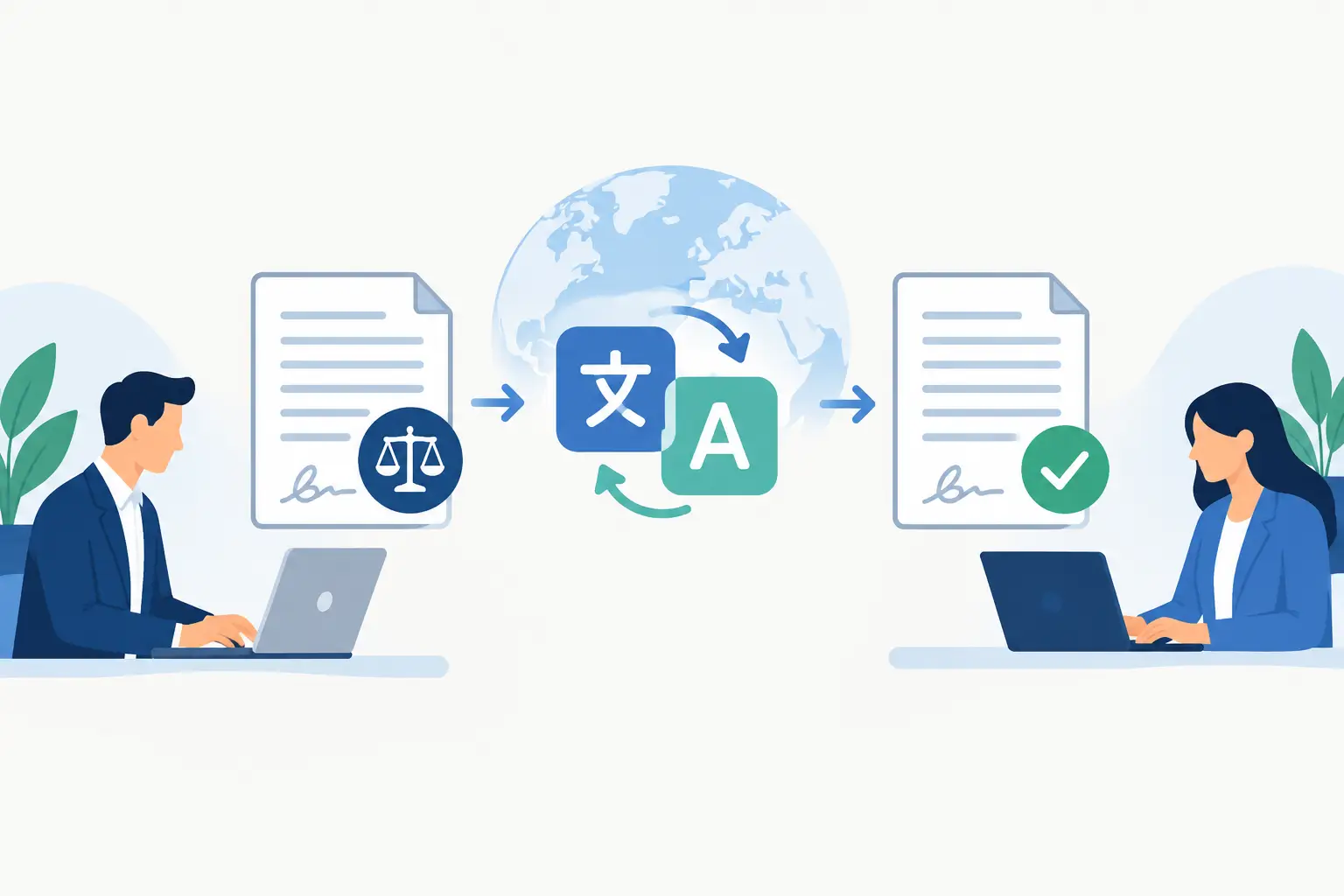
This guide to contract translation workflows helps legal, business, and public-sector teams protect meaning, confidentiality, deadlines, and compliance.
Read more
Medical interpreter qualifications support accurate, confidential care, reduce risk, and help patients understand their options and next steps safely.
Read more
Relocation language training gives relocating employees and families practical communication skills for work, school, healthcare, and daily life abroad.
Read more
Legal interpreter evaluation helps courts, law firms, and agencies confirm language skill, ethics, and courtroom readiness before high-stakes assignment.
Read more
Accessibility translation services deliver clear, inclusive multilingual documents, events, and digital content so every audience can fully take part.
Read more
Lenguae aims to teach language in a comprehensive way. With our courses, you will learn to understand and express yourself in both in writing and speaking, while also getting in touch with the culture of the countries that speak the language you’re learning. All our teachers are experienced in language teaching, being either native speakers or having lived abroad.
Career at Lenguae
