
Immigration Translation Results That Support Approval
Get immigration translation results you can trust with certified document translations that protect meaning, meet USCIS needs, and keep cases moving.
Read more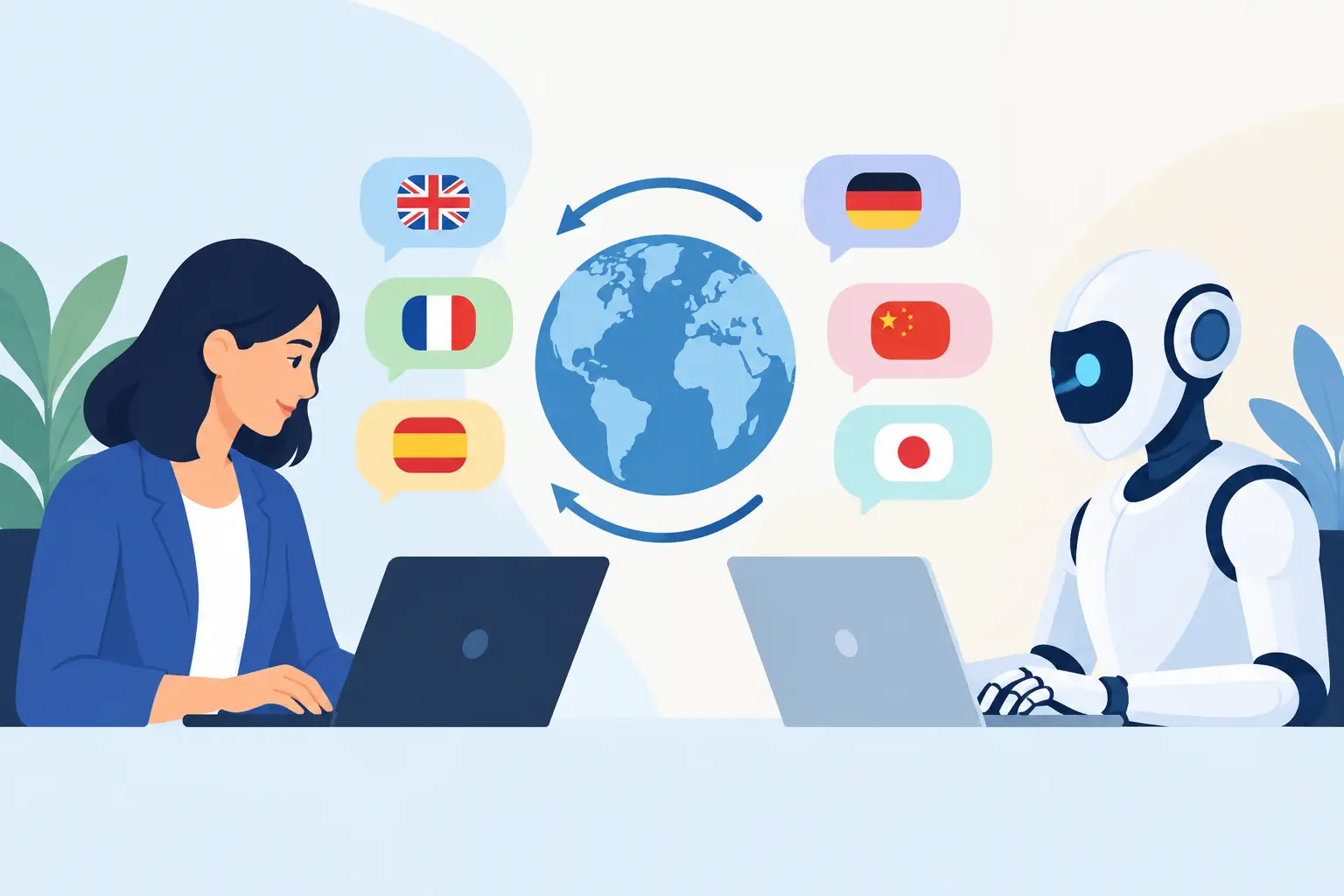
A mistranslated discharge instruction can affect a patient’s recovery. An incorrect term in an immigration filing can delay a family’s plans. A missed qualifier in a contract can change who carries the risk. That is why the human versus machine translation decision is not simply a question of speed or price. It is a decision about what the communication must accomplish, who relies on it, and what happens if it is wrong.
Machine translation has become useful for many everyday tasks. It can quickly provide the general meaning of an email, webpage, product review, or informal message. Professional human translation remains the stronger choice when language must be accurate, culturally appropriate, confidential, and ready for official or high-stakes use.
Machine translation uses software, often powered by artificial intelligence, to predict how words and phrases should appear in another language. The output can be fast and surprisingly readable, particularly for common language pairs and straightforward content. But the system is working from patterns in data. It does not have professional accountability, firsthand knowledge of your case, or a reliable understanding of the real-world consequences behind a phrase.
A human translator brings language ability together with judgment. Native-speaking professionals consider the document’s purpose, intended audience, subject matter, tone, terminology, and regional usage. They recognize when a word has several meanings, when a sentence is intentionally cautious, and when a direct translation would sound unnatural or misleading.
Consider the English word “discharge.” In a hospital record, it may refer to releasing a patient. In a legal matter, it may describe releasing an obligation. In a technical document, it may relate to an electrical or fluid process. Machine translation may select a plausible equivalent without enough context. A qualified healthcare, legal, or technical translator identifies the intended meaning before making that choice.
For low-risk content, machine translation can be a practical starting point. A team member might use it to understand the basic message in a nonconfidential email, scan public information in another language, or prepare a rough internal draft. It can also help multilingual teams move quickly when the wording will be reviewed by a fluent speaker before it is shared.
The key is to treat the output as a convenience, not a final deliverable. Even clear-looking machine output can contain subtle errors: a negative statement rendered as positive, an informal tone used for a formal audience, or terminology that is technically close but not correct for the field.
Machine translation is also not automatically private. Entering legal records, patient information, employee data, proprietary research, or immigration documents into a public tool can create confidentiality and compliance concerns. Organizations should know where their data is processed, retained, and accessed before using any technology for sensitive materials.
Professional human translation is appropriate when accuracy is tied to a legal right, medical decision, financial result, regulatory obligation, or public understanding. It is especially valuable for certified translations submitted to USCIS, courts, universities, licensing boards, and government agencies. These documents often require a signed certification of completeness and accuracy, something a machine cannot provide.
Legal translation requires more than replacing English terms with foreign-language equivalents. Contracts, affidavits, discovery materials, policies, patents, and court documents use terms that carry specific legal meaning. A translator must preserve that meaning while keeping the document clear in the target language.
In healthcare, patients need instructions they can understand and act on. Consent forms, medical histories, discharge paperwork, clinical trial materials, and pharmaceutical documents must use accurate terminology without becoming inaccessible. Cultural competence matters here as well. A literal phrase may be understandable but still fail to communicate with the care, clarity, and respect patients deserve.
Human expertise is equally important for government notices, educational records, safety procedures, employee handbooks, marketing campaigns, and conference materials. Each serves a different audience, and each has its own definition of success. A good translation is not merely converted text. It is communication that works for the person receiving it.
The most expensive translation mistake is not always an obvious one. It may be a sentence that is grammatically correct but too casual for a government audience, too blunt for a patient conversation, or too vague for a contract. Machines can reproduce words. Experienced linguists interpret intent.
This is particularly relevant for Spanish, Chinese, Arabic, Portuguese, French, and other languages spoken across many countries and regions. Vocabulary, formality, and cultural expectations vary. A US company communicating with customers in Mexico may need different wording than it would use for customers in Spain. The same principle applies across language pairs.
Human translators also create consistency across longer projects. If a pharmaceutical company uses a specific term throughout a protocol, labeling document, and training guide, that term needs to remain consistent. If a school district has approved language for family communications, every translated notice should reflect the same message and level of accessibility. Terminology management and editorial review help prevent small inconsistencies from becoming larger problems.
Yes, provided the workflow fits the risk level. For high-volume, repetitive, low-risk material, technology can support efficiency. Translation memory tools can identify previously approved language, while terminology databases help translators apply client-preferred terms consistently. These tools assist qualified linguists rather than replace their review.
A common option is machine translation post-editing, in which a professional translator reviews and corrects machine-generated content. This can work for certain internal documents or standardized materials, but it is not automatically the right choice for every project. If the source text is complex, poorly written, highly sensitive, or intended for official submission, translating directly with a human professional may be more reliable and ultimately more cost-effective.
The right question is not, “Can software translate this?” Almost any text can be processed by software. The better question is, “What level of review does this communication need before someone acts on it?”
Start with the consequences of an error. If the document supports an immigration application, medical treatment, lawsuit, government requirement, or signed agreement, choose a professional human translator with relevant subject-matter experience. If it includes personal, protected, or proprietary information, confirm that confidentiality procedures are in place.
Next, consider the audience. A message for patients, employees, students, customers, or community members needs language that is not only correct but understandable. Ask whether the translation needs certification, formatting that mirrors the original, multiple-language versions, or review by a second linguist.
Finally, consider timing realistically. Machine translation is immediate, but correcting a poor output after it causes confusion can take far longer than planning a professional translation from the beginning. A language services partner can scope the project, assign the right linguist, and offer remote or on-site support when interpretation is also needed.
For organizations balancing speed, budget, and risk, the answer is often a tailored workflow rather than an all-or-nothing choice. Lenguae helps clients match certified, industry-specific human translation and interpreting support to the demands of each situation.
Clear multilingual communication gives people the information they need to participate, decide, comply, and move forward with confidence. When the stakes are high, choose the level of language support that protects the people and outcomes behind every word.
Send us your documents
now and we will get back to
you with a free quote!
"The methodology, material and excellent teachers make Lenguae the best option for the personalized of English, as the learning.”
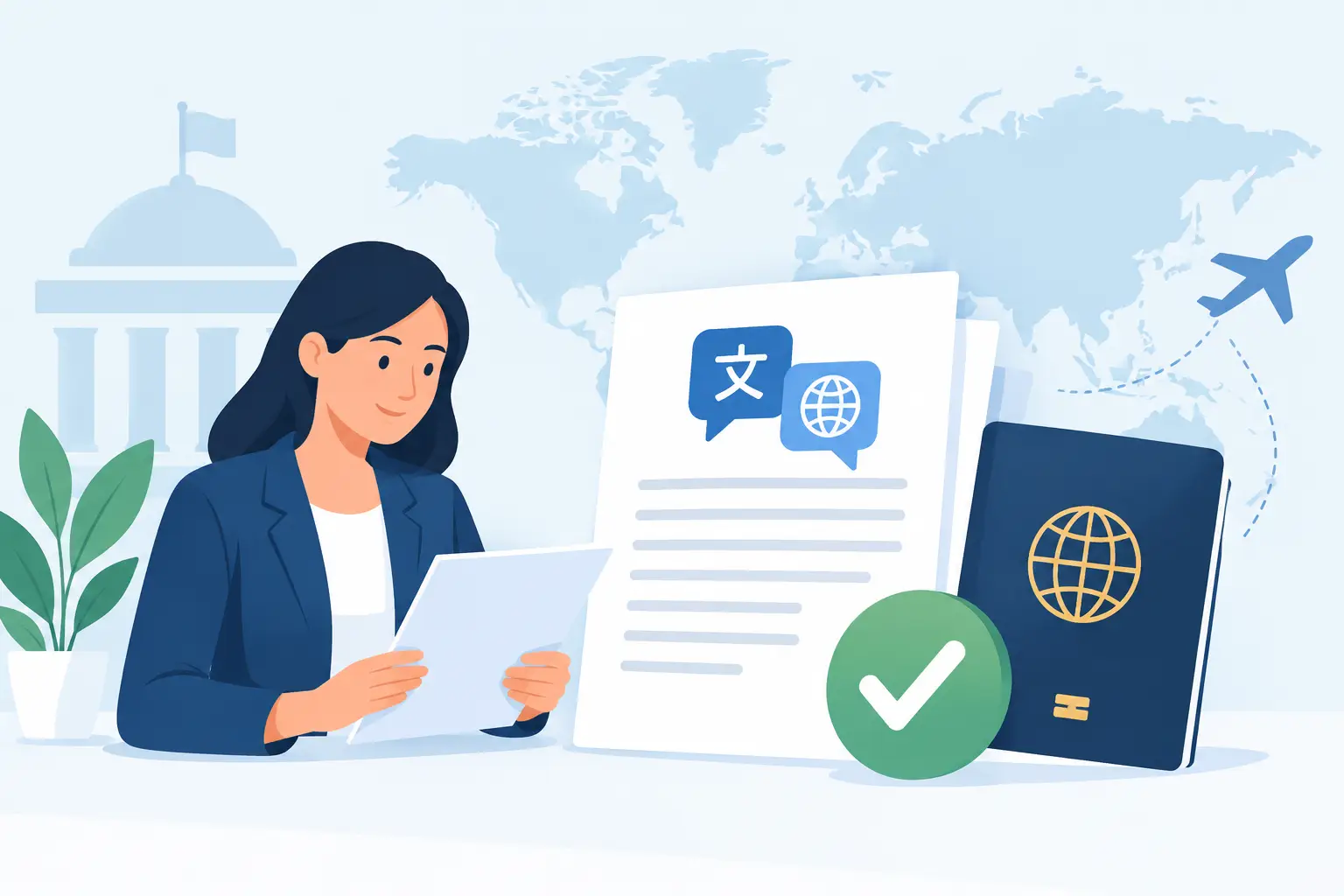
Get immigration translation results you can trust with certified document translations that protect meaning, meet USCIS needs, and keep cases moving.
Read more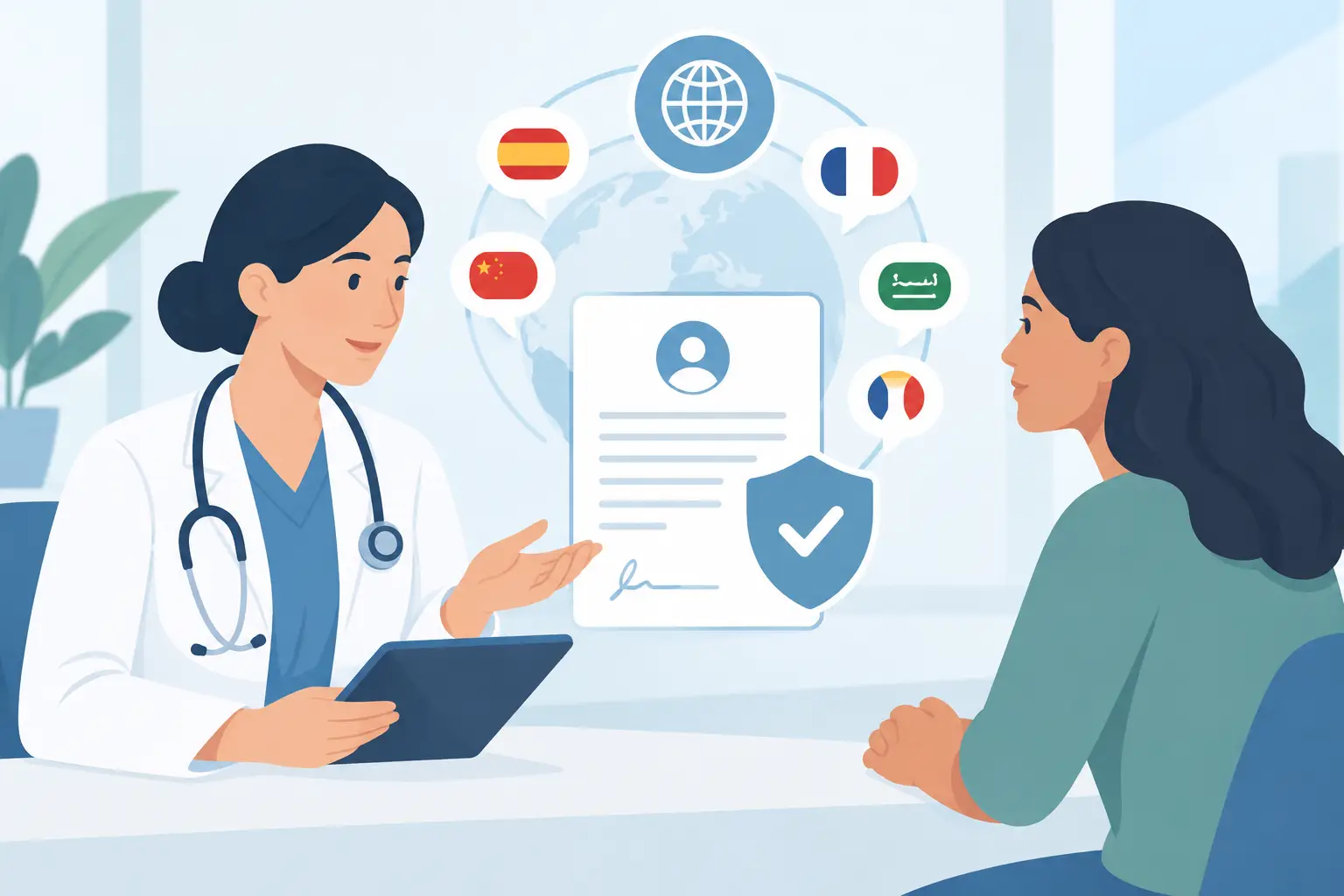
Medical consent translation protects patient choice, supports informed care, and helps providers communicate clearly across languages and cultures safely.
Read more
Conference interpreters help multilingual events run clearly and confidently. Learn how to choose the format, team, and preparation for every audience.
Read more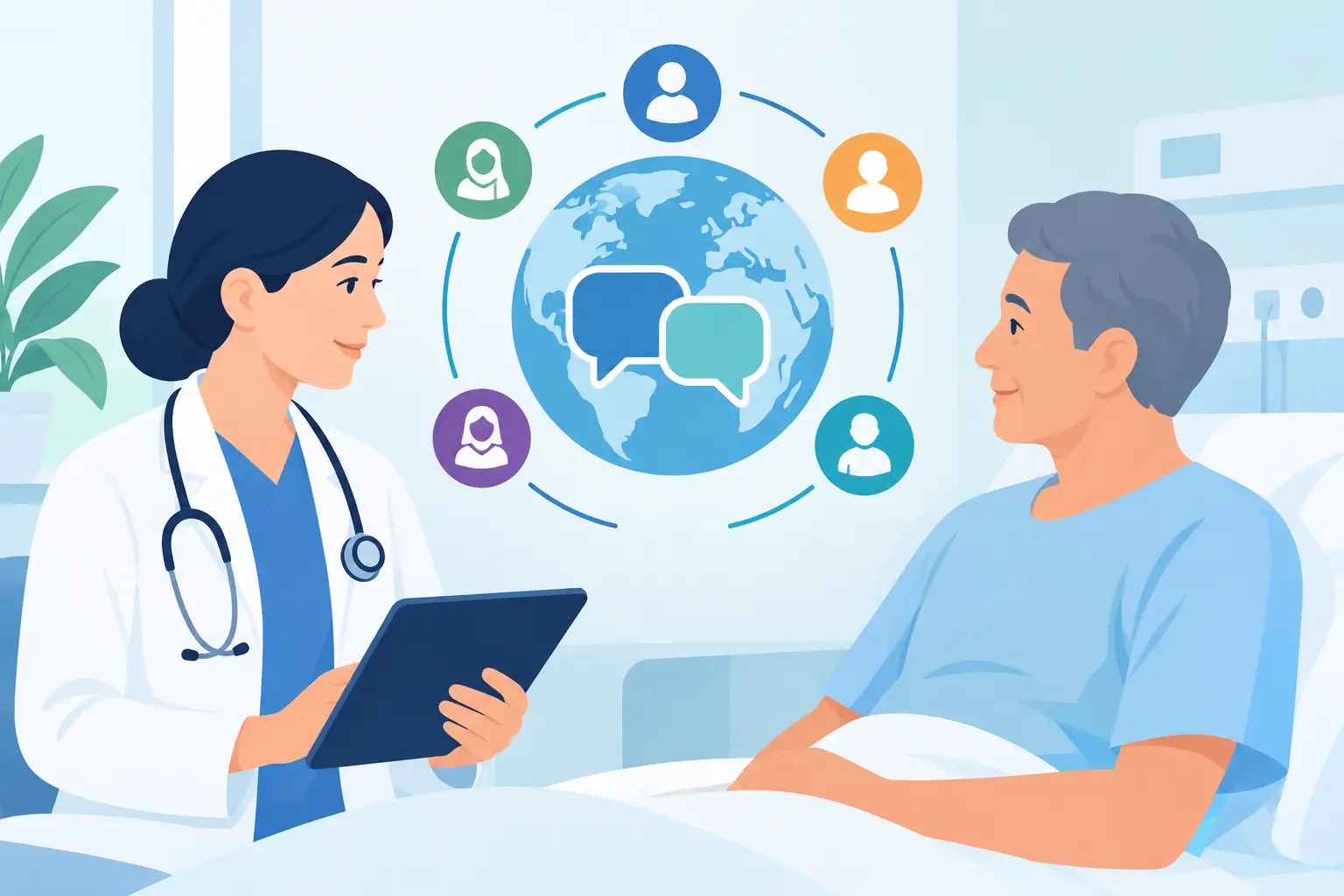
Medical translation protects patient safety, supports informed consent, and helps healthcare teams deliver clear, compliant care across languages safely.
Read more
Government translation gives agencies accurate, confidential communication and interpretation so residents can access vital public services with confidence.
Read more
Lenguae aims to teach language in a comprehensive way. With our courses, you will learn to understand and express yourself in both in writing and speaking, while also getting in touch with the culture of the countries that speak the language you’re learning. All our teachers are experienced in language teaching, being either native speakers or having lived abroad.
Career at Lenguae
