
A Guide to Translation Quality Assurance
This guide to translation quality assurance explains how expert review, terminology control, and secure workflows protect high-stakes communication well.
Read more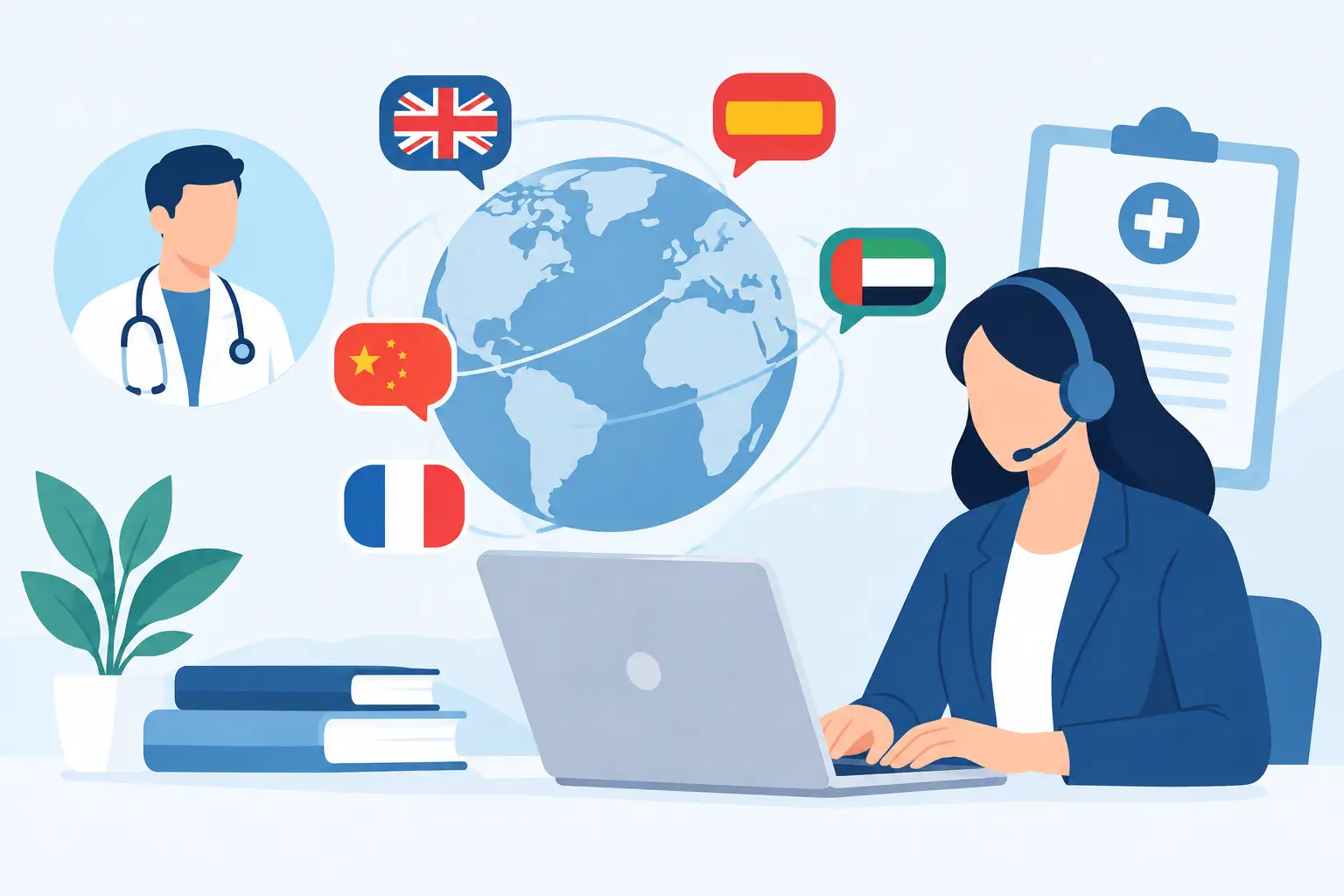
A translated consent form can shape whether a patient understands a procedure. A medication guide can affect how safely a prescription is used. A clinical trial document can determine whether research participants receive clear, informed information. That is why choosing the best medical translation providers is not simply a purchasing decision. It is a patient safety, compliance, and trust decision.
Healthcare organizations, pharmaceutical teams, research institutions, insurers, and individual patients all face different language needs. The right provider should meet those needs with qualified human linguists, secure workflows, proven subject-matter knowledge, and practical support when timelines are tight.
Medical translation requires more than fluency in two languages. Medical terminology is precise, context-dependent, and often high stakes. A word that appears straightforward in a general document may have a specific clinical meaning in a discharge summary, pathology report, device instruction, or patient education brochure.
Qualified medical translators understand how terminology changes across specialties. Cardiology, oncology, behavioral health, pediatrics, pharmacology, and public health each have their own vocabulary, document conventions, and audience expectations. They also know that a translation for a physician may need a different level of language than material intended for a patient or caregiver.
Cultural competence matters just as much. Clear communication is not achieved by replacing one word with another. Patients need language that is understandable, respectful, and appropriate for their community. This is particularly important for informed consent, preventive care outreach, mental health resources, and instructions that require a patient to take action at home.
The best choice depends on your documents, languages, risk level, and turnaround requirements. Still, a dependable provider should be able to explain how it handles the core issues below before a project begins.
Ask whether translators are selected for healthcare experience rather than assigned solely by language pair. A translator working on a surgical consent form, for example, should understand clinical terminology and the consequences of ambiguity. A linguist translating pharmaceutical labeling should be familiar with regulatory language, dosage conventions, and product terminology.
Experience should align with the work itself. A provider that handles immigration documents well may not automatically be the right fit for clinical study protocols. Likewise, a team experienced in patient-facing materials may need additional regulatory expertise for investigator brochures, adverse event reports, or medical device documentation.
Ask specific questions about the provider’s process. Who translates the document? Is there an editor or reviewer? How is terminology approved? What happens when a source document contains unclear wording or an abbreviation with multiple meanings? Clear answers indicate a process built for accuracy rather than speed alone.
Machine translation tools can assist with internal workflows in limited circumstances, but they should not be treated as a substitute for qualified medical linguists. Automated output can miss context, confuse abbreviations, mishandle negation, or produce phrasing that is technically literal but difficult for a patient to understand.
For high-stakes healthcare materials, human translation and review provide essential quality control. A native-speaking professional can recognize whether the target-language text reads naturally, carries the intended meaning, and fits the cultural expectations of its audience.
This does not mean every project requires the same review level. A large internal glossary may be handled differently than patient discharge instructions or a submission package for a regulatory body. A strong provider will recommend a quality approach that matches the document’s purpose and risk, not a one-size-fits-all workflow.
Medical records, insurance documents, clinical research files, and patient correspondence may contain protected health information or other sensitive data. Your translation provider should have clear procedures for handling confidential materials, limiting access to authorized linguists, and transferring files securely.
Before sharing documents, ask how files are stored, who can access them, and whether the provider can meet your organization’s privacy and vendor requirements. Hospitals and healthcare systems may need documentation for procurement or compliance review. Pharmaceutical and research organizations may require confidentiality agreements, controlled access, and defined retention practices.
A provider should treat security as a standard part of service, not an afterthought raised only when a client requests it.
Consistency protects both patient understanding and organizational credibility. If a care program calls a condition by one name in a brochure and another name in an appointment reminder, patients can become confused. In clinical research and pharmaceutical work, inconsistent terminology can create operational and regulatory problems.
Ask whether the provider can build and maintain a glossary of approved terms. This is especially valuable for recurring projects, multi-document campaigns, product materials, and organizations with established preferred wording. A terminology list can include drug names, department names, device components, branded programs, and patient-friendly alternatives to highly technical terms.
The goal is not to force identical phrasing into every situation. Good medical translation accounts for context while preserving approved language where it matters.
Translation solves written communication needs. Interpretation supports real-time conversations. Many healthcare organizations require both, often for the same patient journey.
A patient may receive a translated appointment reminder, need an interpreter during a specialist visit, and later require translated aftercare instructions. Working with a provider that can support document translation alongside phone, video, and on-site interpretation can make language access easier to coordinate.
For healthcare settings, ask about interpreter qualifications, availability, scheduling procedures, and supported languages. It is also helpful to confirm whether interpreters understand medical ethics, confidentiality, and the professional boundaries required in patient-provider conversations.
Fast delivery is often necessary. A hospital may need urgent discharge paperwork. A legal or immigration matter may require translated medical records by a filing deadline. A research team may need multilingual participant materials before enrollment begins.
However, fast turnaround should not mean skipped review or poorly matched linguists. The right provider will be upfront about what is realistic for the document length, language pair, format, and required quality steps. It may offer expedited service while explaining any trade-offs involved.
Planning ahead is the best way to protect both timelines and quality. For recurring needs, establish approved terminology, document templates, and clear submission procedures before an urgent request arrives.
Medical translation needs vary widely, but certain document categories consistently require specialized attention. These include patient intake forms, consent forms, discharge instructions, medical histories, diagnostic reports, vaccination records, medication guides, clinical trial materials, medical device instructions, insurance correspondence, and public health campaigns.
Certified translation may be necessary when medical documents are submitted for immigration, legal, academic, insurance, or government purposes. In these situations, confirm what the receiving organization requires. Some requests call for a signed certification statement, while others may have formatting, notarization, or deadline requirements.
Do not assume that a clear translation is automatically a certified translation. Ask for the appropriate service at the start so the final document is accepted where it needs to be submitted.
A useful quote should reflect more than word count. Share the document type, intended audience, required language or regional variant, desired delivery date, and whether certification is needed. Let the provider know if files contain protected information, require specialized formatting, or need to match existing translated materials.
You should also ask whether the quote includes translation, editing, proofreading, desktop publishing, certification, and project management. If the document contains tables, diagrams, handwritten notes, or scanned pages, confirm how those elements will be handled. Clarity at the quoting stage prevents avoidable delays later.
Cost matters, particularly for organizations managing large language-access programs. Affordable pricing is valuable, but the lowest initial rate may become expensive if inaccurate work causes reprints, patient confusion, missed deadlines, or compliance concerns. Look for transparent pricing paired with a process that protects the value of your materials.
The strongest medical translation provider is one that listens closely to the purpose of your communication. It should make it easier for clinicians to inform patients, for researchers to communicate responsibly, and for organizations to serve multilingual communities with respect.
Lenguae supports healthcare and high-stakes communication needs with native human linguists, specialized language expertise, secure service, and flexible remote or on-site options. Whether you need a certified medical record translation or ongoing multilingual patient materials, choosing a qualified partner helps every reader receive information they can understand and use with confidence.
Send us your documents
now and we will get back to
you with a free quote!
"The methodology, material and excellent teachers make Lenguae the best option for the personalized of English, as the learning.”
This guide to translation quality assurance explains how expert review, terminology control, and secure workflows protect high-stakes communication well.
Read more
Pharmacovigilance translation services support clear, compliant safety reporting across languages, protecting patients and helping teams meet deadlines.
Read more
Human versus machine translation affects accuracy, privacy, cost, and speed. Learn when expert linguists protect your most important communication needs.
Read more
Get immigration translation results you can trust with certified document translations that protect meaning, meet USCIS needs, and keep cases moving.
Read more
Medical consent translation protects patient choice, supports informed care, and helps providers communicate clearly across languages and cultures safely.
Read more
Lenguae aims to teach language in a comprehensive way. With our courses, you will learn to understand and express yourself in both in writing and speaking, while also getting in touch with the culture of the countries that speak the language you’re learning. All our teachers are experienced in language teaching, being either native speakers or having lived abroad.
Career at Lenguae
