
Medical Translation That Protects Patient Care
Medical translation protects patient safety, supports informed consent, and helps healthcare teams deliver clear, compliant care across languages safely.
Read more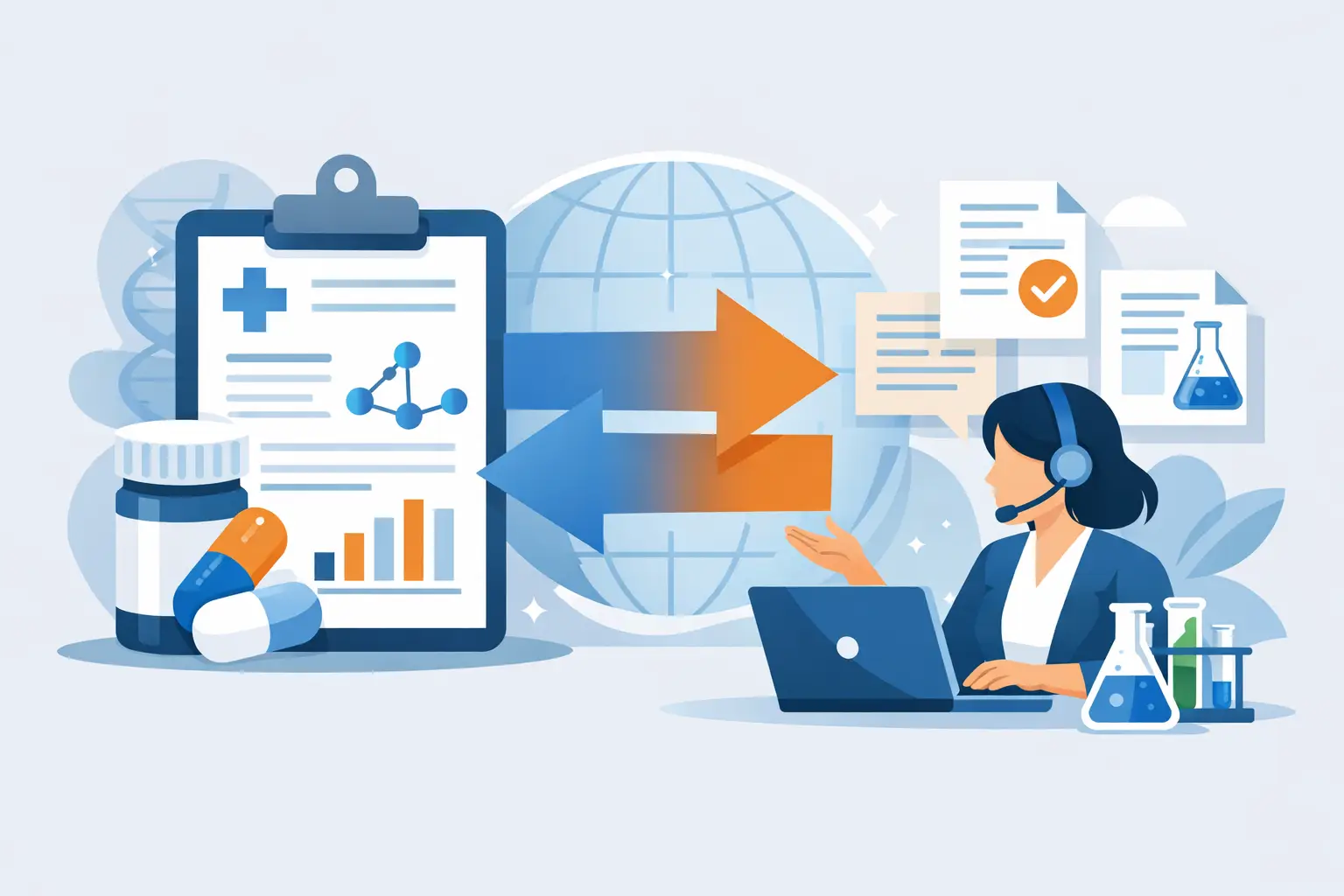
A consent form can be clinically accurate in English and still fail its purpose when a participant cannot understand what a procedure involves, what risks may occur, or how to withdraw from a study. That is why clinical trial document translation is not a routine administrative task. It is a patient-safety, compliance, and study-quality requirement.
For sponsors, CROs, research sites, and healthcare organizations, every translated document must preserve the source meaning while making sense to the people who will use it. A vague phrase in an informed consent form can affect enrollment. An inconsistent term in a protocol amendment can create site confusion. A delayed safety communication can disrupt a study already operating on a demanding timeline.
Clinical research documents sit at the intersection of medical science, regulatory requirements, and human communication. They may be reviewed by investigators, institutional review boards, site coordinators, patients, regulators, and vendors across several countries. Each audience needs information that is accurate, usable, and appropriate to its role.
A general translator may understand the words in a document without understanding the study context. In clinical trials, context changes meaning. “Screening,” for example, can refer to eligibility procedures rather than a general health test. “Adverse event” has a defined regulatory and clinical meaning that should not be replaced with a casual equivalent. The same precision applies to dosage schedules, endpoints, visit windows, investigational products, and discontinuation criteria.
The goal is not word-for-word conversion. It is faithful, medically sound communication that remains consistent with the approved source document and the terminology used throughout the trial. That work calls for native human translators with healthcare and pharmaceutical experience, plus a quality process designed for high-stakes content.
The translation scope varies by study phase, therapeutic area, country, and sponsor requirements. Still, several document categories routinely require specialized handling:
These documents do not all need the same approach. A dense investigator brochure may require extensive terminology management and subject-matter review. A patient diary needs plain, readable language that participants can complete confidently. A regulatory document may need to follow a prescribed format, include certification, or meet country-specific submission expectations.
Informed consent translation deserves particular attention because it supports a participant’s right to make an informed decision. The text must communicate medical risks, alternatives, benefits, privacy practices, compensation, and study procedures without distorting the approved content.
Readability matters, but simplification has limits. Translators cannot omit details or soften risk language merely to make a document easier to read. Instead, the translation should use clear, natural language while retaining the full clinical and legal meaning of the original. Where local regulations or IRB requirements apply, the translated version also needs to align with the approved process for that site or jurisdiction.
Cultural competence matters here as well. A literal rendition may be grammatically correct but unfamiliar, overly formal, or confusing to the intended community. Concepts such as voluntary participation, family involvement in healthcare decisions, privacy, and compensation may need careful phrasing to be understood as intended. This is not a reason to change the study message. It is a reason to ensure the message is genuinely accessible.
The most efficient translation projects are prepared well before the first file is assigned. Sponsors and CROs can reduce revision cycles by providing clean, final source documents and identifying the intended audience, target countries, file format, and required delivery date at the outset.
A shared glossary is especially valuable for multicountry studies. It records approved translations for drug names, conditions, procedures, role titles, study terms, and recurring instructions. A style guide can address tone, capitalization, abbreviations, units of measure, date formats, and patient-friendly wording. Together, these resources help every language version remain aligned as new documents and amendments are issued.
It also helps to distinguish between global consistency and local fit. A term may need to remain identical across all documents for traceability, while another may require a country-specific equivalent to be understandable or compliant. Experienced language professionals flag these decisions early rather than allowing inconsistencies to surface during review.
Not every document needs the same level of review, but every clinical translation needs a defined quality path. The appropriate process depends on the document type, the intended use, the therapeutic area, the number of languages, and whether the material will be submitted to an authority or ethics committee.
For high-risk materials, a strong workflow commonly includes translation by a qualified linguist, editing by a second linguist, terminology verification, and final formatting review. When patient-reported outcome instruments or validated questionnaires are involved, additional linguistic validation steps may be required. Back translation can be useful in specific circumstances, particularly when required by a sponsor or instrument owner, but it is not a substitute for expert forward translation and review.
Formatting deserves attention too. Tables, visit schedules, checkboxes, tracked changes, electronic forms, and layout-sensitive consent documents can introduce errors after the linguistic work is complete. A final visual check helps confirm that headings, footnotes, page references, labels, and fields remain usable in the target language.
Clinical trial materials often contain proprietary research data, personal health information, and commercially sensitive plans. Translation providers should treat confidentiality as part of the service, not as an add-on.
Before files are shared, organizations should understand how documents will be transferred, who can access them, how linguists are vetted, and how long data is retained. Secure file handling, confidentiality agreements, controlled access, and clear project communication help reduce unnecessary exposure. For studies involving protected health information, the language partner should also be prepared to work within the organization’s privacy and security requirements.
Speed matters in clinical research, especially when an amendment, safety notice, or enrollment material is needed quickly. Yet speed without controls can create expensive rework. The practical answer is a translation partner with scalable language coverage, established clinical resources, and a project process that can prioritize urgent materials without skipping qualified review.
The right provider is more than a vendor that receives files and returns translations. They should be able to ask useful questions before work begins: Is this for participants, investigators, or regulators? Is there an approved glossary? Does the source contain tracked changes? Are country-specific adaptations expected? Does the study require certified translations or an established review route?
Look for native linguists with relevant medical or pharmaceutical expertise, disciplined terminology management, responsive project coordination, and clear confidentiality practices. Broad language coverage is helpful for global studies, but quality should never be diluted as the number of target languages grows. It is often better to establish one reliable workflow across the study than to manage disconnected providers for each market.
Lenguae supports organizations that need accurate, confidential translation for healthcare and pharmaceutical communications, including time-sensitive document workflows. With native human translators and specialized language support, the focus remains on clear communication for every audience involved in the research process.
A well-translated clinical trial document does more than satisfy a checklist. It helps sites act consistently, gives participants information they can understand, and protects the integrity of the study as it moves across languages and borders. When the next protocol, consent form, or safety communication is ready, start with the people who must rely on it – then build the translation process around their needs.
Send us your documents
now and we will get back to
you with a free quote!
"The methodology, material and excellent teachers make Lenguae the best option for the personalized of English, as the learning.”
Medical translation protects patient safety, supports informed consent, and helps healthcare teams deliver clear, compliant care across languages safely.
Read more
Government translation gives agencies accurate, confidential communication and interpretation so residents can access vital public services with confidence.
Read more
Emergency language interpretation gives healthcare, legal, and public agencies fast, accurate support when clear communication cannot wait in crises.
Read more
Why use certified translators? Learn how accurate, compliant translations protect immigration, legal, healthcare, academic, and business records quickly.
Read more
See which top documents needing certification need certified translation, notarization, or an apostille – and prepare your US submission correctly today.
Read more
Lenguae aims to teach language in a comprehensive way. With our courses, you will learn to understand and express yourself in both in writing and speaking, while also getting in touch with the culture of the countries that speak the language you’re learning. All our teachers are experienced in language teaching, being either native speakers or having lived abroad.
Career at Lenguae
