
What a Legal Deposition Interpreter Must Do
A legal deposition interpreter protects accurate testimony, confidentiality, and due process across languages. Learn what deposition support requires.
Read more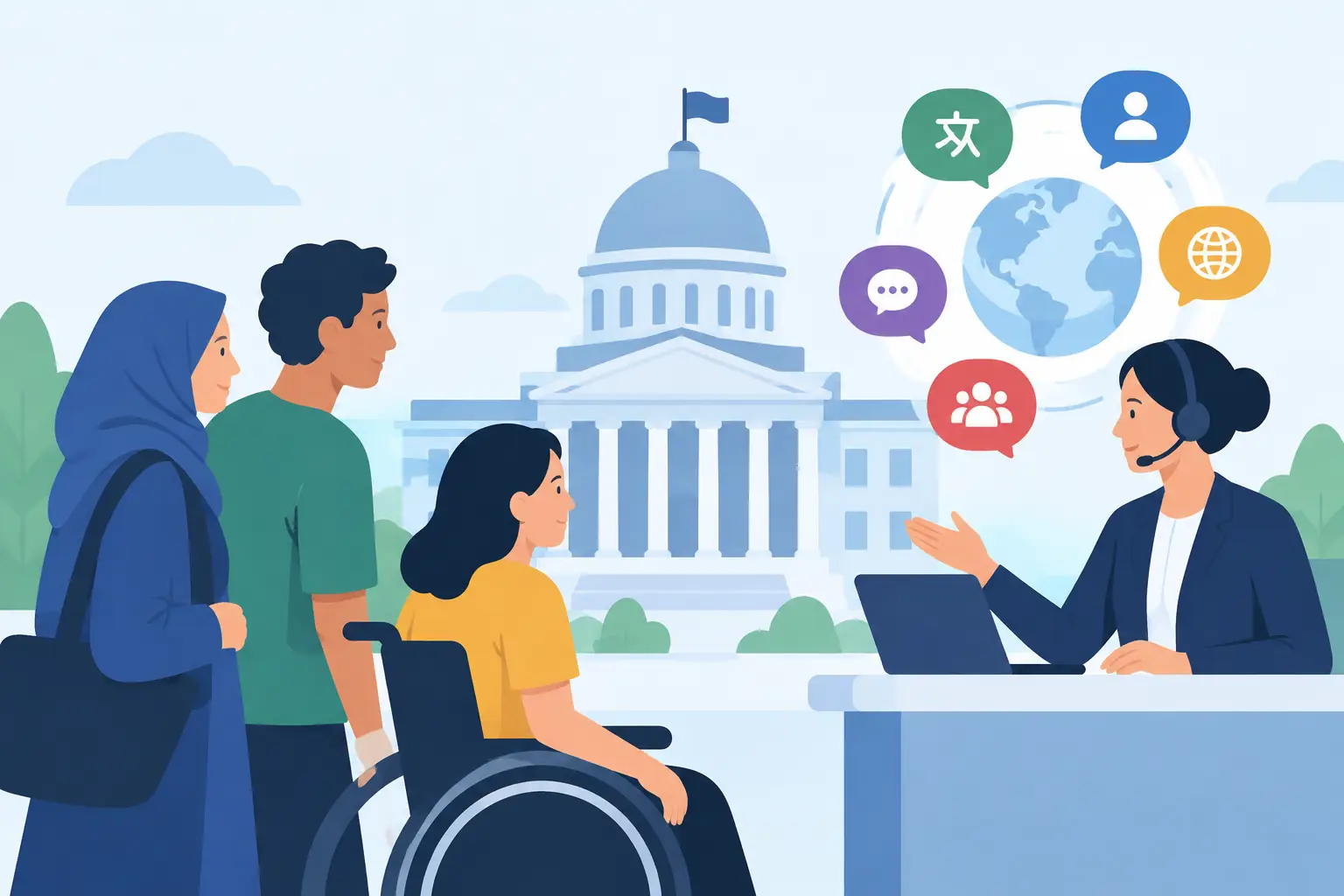
A missed deadline, an unread emergency notice, or a misunderstood benefits form can keep a resident from services they qualify for. Government translation turns public information into communication people can actually use, regardless of the language they speak at home. For federal, state, and local agencies, that work supports access, protects due process, and builds trust in every interaction.
The stakes are especially high when information affects health, housing, education, public safety, immigration, licensing, or legal rights. A translated document must do more than resemble the English source. It must preserve the intended meaning, use terminology the audience can understand, and meet the agency’s requirements for accuracy, confidentiality, and format.
Government materials often combine plain-language public guidance with legal, technical, or program-specific terms. A notice about Medicaid eligibility, for example, may include deadlines, verification requirements, appeal rights, and instructions that cannot be loosely interpreted. A word-for-word rendering can be just as risky as an overly simplified one if it changes what a resident is required to do.
Professional government translation relies on native-language translators with relevant subject expertise and a structured review process. The right linguist understands both languages, the subject matter, and how public systems are described within the target-language community. This is particularly important for languages that use different writing systems, naming conventions, date formats, or levels of formality.
Accuracy also means consistency. If one department calls a program “rental assistance” while another uses a different translated term, residents may assume they are separate services. Approved terminology, translation memories, and glossary management help agencies keep recurring language consistent across forms, websites, letters, and outreach materials.
Written translation and spoken interpretation are related services, but they solve different problems. Translation applies to documents and digital content, including application forms, meeting agendas, policy notices, website pages, voter information, public health guidance, training materials, and correspondence. Interpretation supports live communication, such as a benefits interview, public hearing, court-related appointment, emergency briefing, or community meeting.
An agency may need both services for a single initiative. Consider a public hearing on a proposed zoning change. Residents may need translated notices and presentation materials before the meeting, on-site or remote interpreters during the discussion, and translated follow-up information afterward. Planning these needs together helps every participant receive the same essential information at the right time.
The appropriate interpretation format depends on the event. Consecutive interpretation is often effective for smaller meetings, interviews, and appointments because the speaker pauses for interpretation. Simultaneous interpretation is generally better for conferences, large public meetings, and multilingual presentations where participants need to listen in real time. Video remote and telephone interpreting can provide flexible coverage when an in-person interpreter is not practical.
Public agencies manage a wide range of materials, each with its own audience and risk level. High-priority content often includes emergency alerts, public health notices, consent forms, applications, eligibility letters, civil rights information, complaint procedures, permits, and notices of hearings or appeals.
Some documents require a more formal approach. Certified translations may be requested for immigration records, vital records, academic documents, court submissions, or other official purposes. Requirements vary by receiving organization, so agencies and individuals should confirm whether a certification statement, notarization, specific layout, or other supporting documentation is needed before work begins.
Digital content deserves the same attention as paper documents. A multilingual website should not lead residents to a translated landing page only to send them back to English for an application, payment portal, or appointment request. Translation planning should account for downloadable PDFs, embedded forms, captions, image text, email templates, and automated messages as well as visible web copy.
The most effective language programs are planned before a deadline is urgent. Agencies do not need to translate every document into every language immediately. They do need a clear way to identify high-impact materials, understand community language needs, and engage qualified language professionals quickly when circumstances change.
Start by identifying the documents and interactions that affect a resident’s ability to receive services or exercise a right. Prioritize time-sensitive notices, materials connected to safety or legal deadlines, and documents frequently requested by the public. Then determine which languages are most needed using available demographic data, service records, community feedback, and legal access obligations.
Source content matters as much as the translation itself. Writers should avoid unexplained acronyms, vague references such as “the above office,” and dense sentences that combine several instructions. Plain English gives translators a clearer source and gives residents a better final document. It also reduces rounds of clarification that can delay delivery.
For recurring programs, agencies benefit from sharing reference materials early. Existing bilingual forms, approved terms, prior translations, style preferences, and intended audience details help the language team work efficiently without sacrificing quality. A qualified provider should ask questions when the source is unclear rather than guess at meaning.
A dependable workflow typically includes translation by a native professional, editing or review by a second qualified linguist, formatting checks, and final quality assurance. For public-facing materials, agencies may also request an in-country or community review when regional wording and cultural context are especially important. That extra step may add time, so it is best reserved for major campaigns, sensitive topics, or content intended for broad distribution.
Government language projects frequently contain personally identifiable information, protected health information, case records, legal details, or internal policy materials. Sending documents through informal channels or relying on unvetted bilingual staff can create preventable privacy and security risks.
A professional language partner should use secure file handling, assign linguists who are bound by confidentiality obligations, and limit project access to the people who need it. Agencies should also establish clear instructions for redaction, document retention, secure delivery, and urgent after-hours requests. These safeguards matter whether the project is a single birth certificate or a large set of case-management documents.
Confidentiality is equally vital in interpretation. Residents need to know that an interpreter is impartial, accurate, and professionally bound to protect what is discussed. Family members, friends, and minor children should not be asked to interpret sensitive healthcare, legal, or benefits conversations except in truly exceptional circumstances.
Price and turnaround matter, but they should not be the only factors. The lowest initial quote can become expensive if terminology errors require reprints, an interpreter lacks subject familiarity, or a missed deadline prevents a resident from responding on time.
Look for a provider with proven experience in your subject area, access to qualified native linguists, clear quality controls, secure project management, and the capacity to support both planned and urgent needs. Ask how the provider handles terminology, reviewer qualifications, file formats, certification requests, and changes to source documents. For public meetings and ongoing service lines, confirm interpreter availability, remote options, and procedures for scheduling coverage across multiple languages.
It also helps to choose a partner that can scale without losing continuity. A statewide outreach campaign, for example, may require translated materials in several languages, telephone interpreting for call centers, and interpreters for community events. Working with one coordinated team makes it easier to maintain approved terminology and a consistent resident experience. Lenguae supports these needs with native human linguists, secure language solutions, and flexible remote or on-site delivery.
When residents can understand instructions, ask questions in their preferred language, and participate in public decisions, agencies operate more effectively. Applications are more complete, appointments are more productive, outreach reaches further, and staff spend less time correcting avoidable misunderstandings.
The goal is not simply to produce translated words. It is to make essential government services understandable, usable, and available to the people they are meant to serve. A thoughtful language plan gives every resident a clearer path to participate with confidence.
Send us your documents
now and we will get back to
you with a free quote!
"The methodology, material and excellent teachers make Lenguae the best option for the personalized of English, as the learning.”

A legal deposition interpreter protects accurate testimony, confidentiality, and due process across languages. Learn what deposition support requires.
Read more
Learn how to request language interpretation with the right format, language, timing, and context for clear, confidential communication across settings.
Read more
Phone interpretation services give healthcare, legal, and government teams fast, confidential language support when a qualified interpreter is needed now.
Read more
Choose the best medical translation providers with confidence. Learn what protects patient safety, supports compliance, and keeps every records clear.
Read more
This guide to translation quality assurance explains how expert review, terminology control, and secure workflows protect high-stakes communication well.
Read more
Lenguae aims to teach language in a comprehensive way. With our courses, you will learn to understand and express yourself in both in writing and speaking, while also getting in touch with the culture of the countries that speak the language you’re learning. All our teachers are experienced in language teaching, being either native speakers or having lived abroad.
Career at Lenguae
