
Language Training That Builds Real-World Confidence
Language training helps teams and individuals communicate clearly, serve diverse communities, and build confidence for work, care, and daily situations.
Read more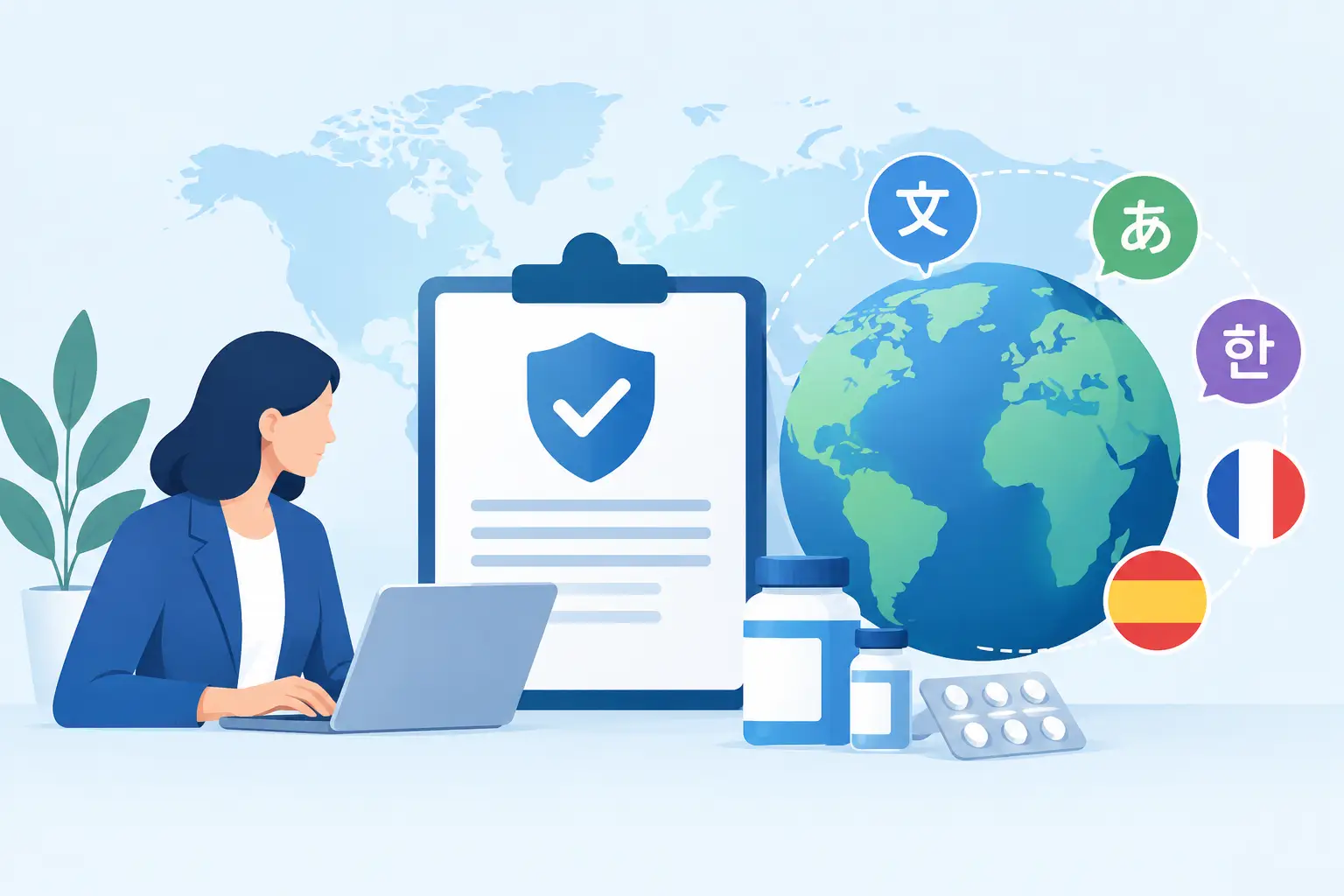
A guide to FDA translation compliance starts with a practical reality: a mistranslated term in a clinical protocol, informed consent form, adverse event report, or product label can affect far more than readability. It can delay a submission, compromise study data, confuse patients, or create questions about whether the documentation accurately reflects the original.
For pharmaceutical, medical device, biotechnology, and healthcare organizations, translation is not a last-minute administrative task. It is part of the quality process. The right approach protects scientific meaning, supports patient understanding, and gives regulatory teams clear evidence that multilingual materials were handled with care.
FDA translation compliance does not usually mean there is one universal certification or one translation rule for every document. Requirements vary by product type, submission pathway, study location, intended audience, and the purpose of the document. A US-facing patient leaflet has different considerations than foreign clinical study records submitted in support of an investigational product.
The consistent expectation is that information supplied to the FDA must be accurate, complete, intelligible, and traceable to its source. When a document originates in another language, the English translation must preserve the scientific, medical, and regulatory meaning of the original. When materials are translated from English for patients, sites, investigators, or other audiences, the translated version must communicate the approved content without introducing ambiguity or changing the risk-benefit message.
This distinction matters. A literal translation can still be noncompliant if it uses the wrong clinical term, changes the strength of a warning, or reads so unnaturally that patients cannot understand what they are being asked to do.
A translation inventory helps teams decide where review effort is most needed. Rather than sending files for translation one at a time, identify the full document set for the study, submission, product, or program. This gives language specialists the context needed to use terminology consistently across related materials.
High-priority documents often include clinical protocols, investigator brochures, informed consent forms, recruitment materials, patient diaries, electronic clinical outcome assessments, safety narratives, adverse event documentation, product labeling, instructions for use, packaging text, standard operating procedures, and foreign regulatory records.
Some materials require particular attention because they directly influence patient safety or data quality. Informed consent forms must be understandable to the intended participant population, not merely grammatically correct. Instructions for use must help users operate a device safely. A patient-reported outcome questionnaire may require linguistic validation rather than standard translation alone, especially when the instrument is intended to generate comparable data across languages.
Not every FDA-related document needs the same translation workflow. Treating every project alike can add unnecessary cost in some cases and create avoidable risk in others.
For foreign-language source documents submitted as supporting evidence, a qualified human translation with a clear certification statement may be appropriate. The certification should identify the translated document, language pair, translator or translation provider, date, and an affirmation that the translation is complete and accurate to the best of the translator’s knowledge and ability. Your regulatory team should confirm the requirements for the specific submission and document type before finalizing the package.
For patient-facing clinical trial materials, the process is often more rigorous. It may include translation by a native-speaking medical linguist, independent editing, reconciliation of reviewer comments, and review by the study sponsor or local site. Depending on the material, back translation, clinician review, or cognitive debriefing with members of the target population may be appropriate.
For labeling, promotional content, and instructions for use, translation must align with approved source language and controlled terminology. The level of review should reflect the potential consequence of an error. A dosage instruction, contraindication, or device warning deserves a different level of scrutiny than an internal scheduling notice.
Terminology control is one of the clearest ways to reduce translation risk. A single term may appear in protocols, consent forms, case report forms, training modules, safety reports, and labels. If each document uses a different equivalent in the target language, the result can confuse sites, patients, reviewers, and internal teams.
Create a project glossary before major translation begins. It should include product names, active ingredients, device components, study titles, disease-state terms, procedural language, abbreviations, and approved patient-friendly phrasing. Define terms that should remain untranslated, such as certain brand names or system fields, and flag terms that require careful adaptation.
A translation memory can also support consistency across repeated content and later protocol amendments. It is useful only when managed well. Previous translations should not be reused automatically without confirming that the source text, indication, country requirements, and approved terminology still apply.
FDA-regulated work depends on being able to show what happened, when it happened, and who approved it. Translation files need the same discipline as other controlled documents.
Maintain a record of the source file version, target language, translator and reviewer qualifications, dates of translation and review, approval status, and final delivered format. When the source changes, identify exactly which translated versions are affected. A small amendment to an English consent form may require updates across several languages, and distributing an outdated version can create site-level compliance problems.
This becomes especially important with electronic systems. If content is moved from a Word document into an eConsent platform, ePRO tool, website, or labeling artwork, the translated text should be reviewed in its final layout. Text expansion, truncated fields, broken characters, misplaced warnings, and right-to-left formatting issues can alter meaning even when the original translation was correct.
Fluency alone is not enough for FDA-related translation. A linguist may be an excellent general translator and still lack the experience to distinguish between an adverse event, a serious adverse event, and an unexpected adverse reaction in the context of your materials.
Look for native human translators with demonstrated expertise in the relevant field, whether that is clinical research, pharmacovigilance, medical devices, biologics, chemistry, or regulatory affairs. They should understand how to research terminology, follow client glossaries, preserve formatting, and raise queries when source content is unclear.
Confidentiality is equally central. Clinical and regulatory files may contain personal health information, unblinded study details, proprietary formulas, or unreleased product information. Your language partner should use secure file handling, controlled access, confidentiality agreements, and a defined process for retaining or deleting files.
Machine translation can assist limited internal tasks, such as triaging large volumes of low-risk content, but it should not replace qualified human review for patient-facing, submission-critical, or safety-sensitive materials. Public tools can also create confidentiality concerns. The decision depends on document risk, available safeguards, and whether every output will receive expert post-editing.
FDA-focused translation is often treated as an English-language exercise, but multilingual clinical work succeeds only when target audiences can understand and act on the information. Reading level, local healthcare practices, date formats, units of measurement, and culturally sensitive concepts may all need review.
For example, a phrase that is legally acceptable in English may be unfamiliar or overly formal in another language. A translator should not change approved meaning independently, yet the team should have a process for documenting questions and approving necessary adaptations. That balance preserves both fidelity and comprehension.
This is particularly relevant for US studies enrolling participants who speak Spanish, Chinese, Haitian Creole, Portuguese, Arabic, or other languages. Providing clear, carefully reviewed materials supports more inclusive participation and helps sites communicate with confidence.
Before a translated document is released, confirm that the source version is final, all required content is present, terminology matches the approved glossary, and revisions have been incorporated. Verify names, numbers, units, dates, contact details, tables, footnotes, and warnings separately. These elements are easy to overlook and often carry significant regulatory or safety consequences.
Then confirm the right people have approved the final file. Depending on the project, that may include regulatory affairs, clinical operations, medical affairs, legal counsel, country affiliates, or the investigator site. The goal is not to add reviewers without purpose. It is to ensure that each reviewer addresses the risks they are qualified to assess.
For organizations managing multiple languages, products, or studies, a professional language partner can provide centralized terminology, qualified medical linguists, certified translations, and clear documentation across the workflow. Lenguae helps teams support accurate multilingual communication while protecting confidentiality and meeting demanding timelines.
The most useful translation process is the one established before the urgent request arrives. When terminology, reviewers, document controls, and language resources are already in place, teams can move faster without asking patients, sites, or regulators to absorb the cost of a preventable error.
Send us your documents
now and we will get back to
you with a free quote!
"The methodology, material and excellent teachers make Lenguae the best option for the personalized of English, as the learning.”

Language training helps teams and individuals communicate clearly, serve diverse communities, and build confidence for work, care, and daily situations.
Read more
A guide to multilingual employee onboarding helps HR teams deliver clear, compliant training, protect privacy, and build belonging from day one for all.
Read more
A guide to international document legalization: understand apostilles, authentication, certified translations, and filing steps before you submit abroad.
Read more
Compare remote versus onsite interpreting for healthcare, legal, government, and business needs. Choose the right format for accuracy, privacy, and access.
Read more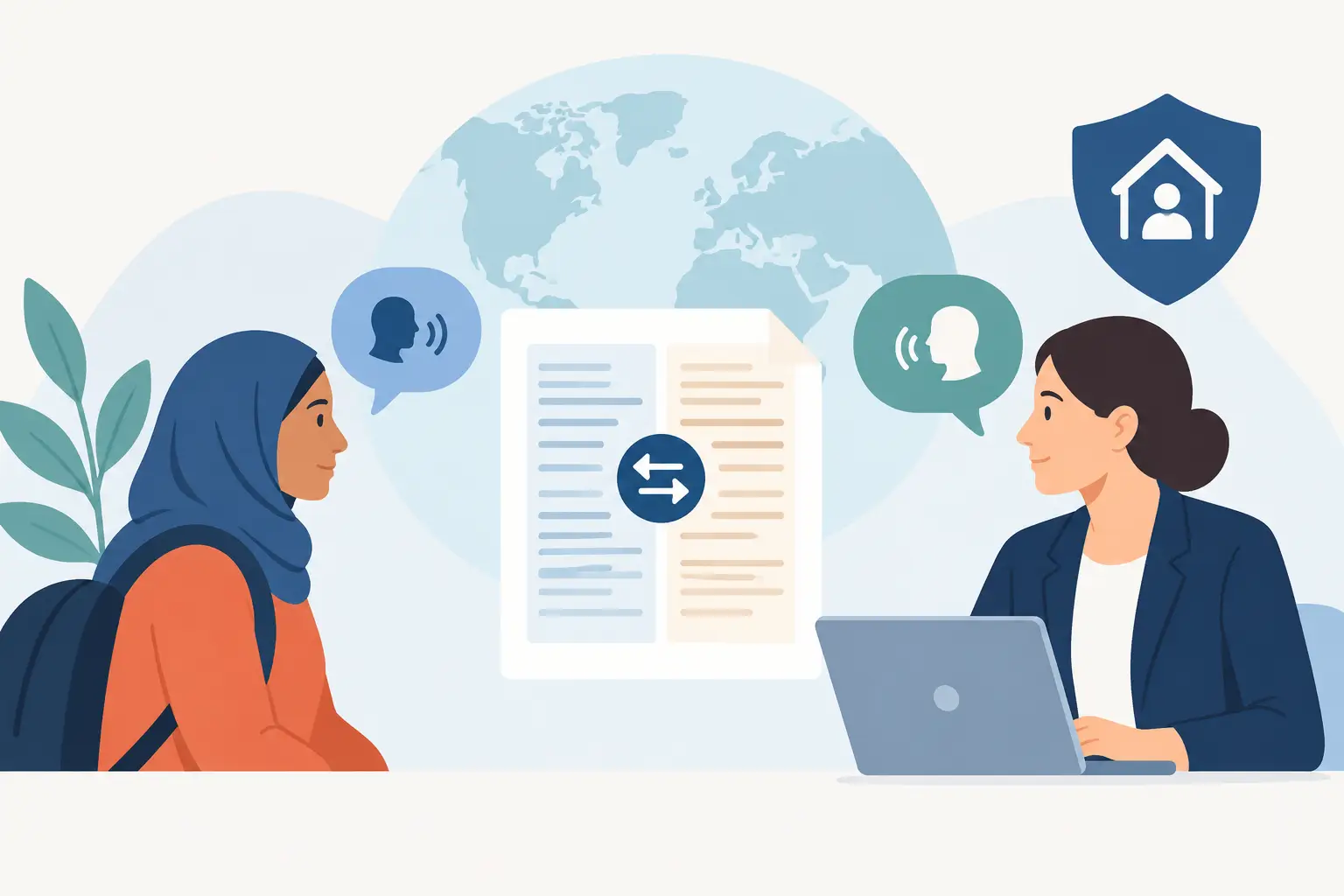
See what an asylum translation example should include, from translator certification to faithful wording, dates, seals, and document formatting for USCIS.
Read more
Lenguae aims to teach language in a comprehensive way. With our courses, you will learn to understand and express yourself in both in writing and speaking, while also getting in touch with the culture of the countries that speak the language you’re learning. All our teachers are experienced in language teaching, being either native speakers or having lived abroad.
Career at Lenguae
