
A Guide to Translation Quality Assurance
This guide to translation quality assurance explains how expert review, terminology control, and secure workflows protect high-stakes communication well.
Read more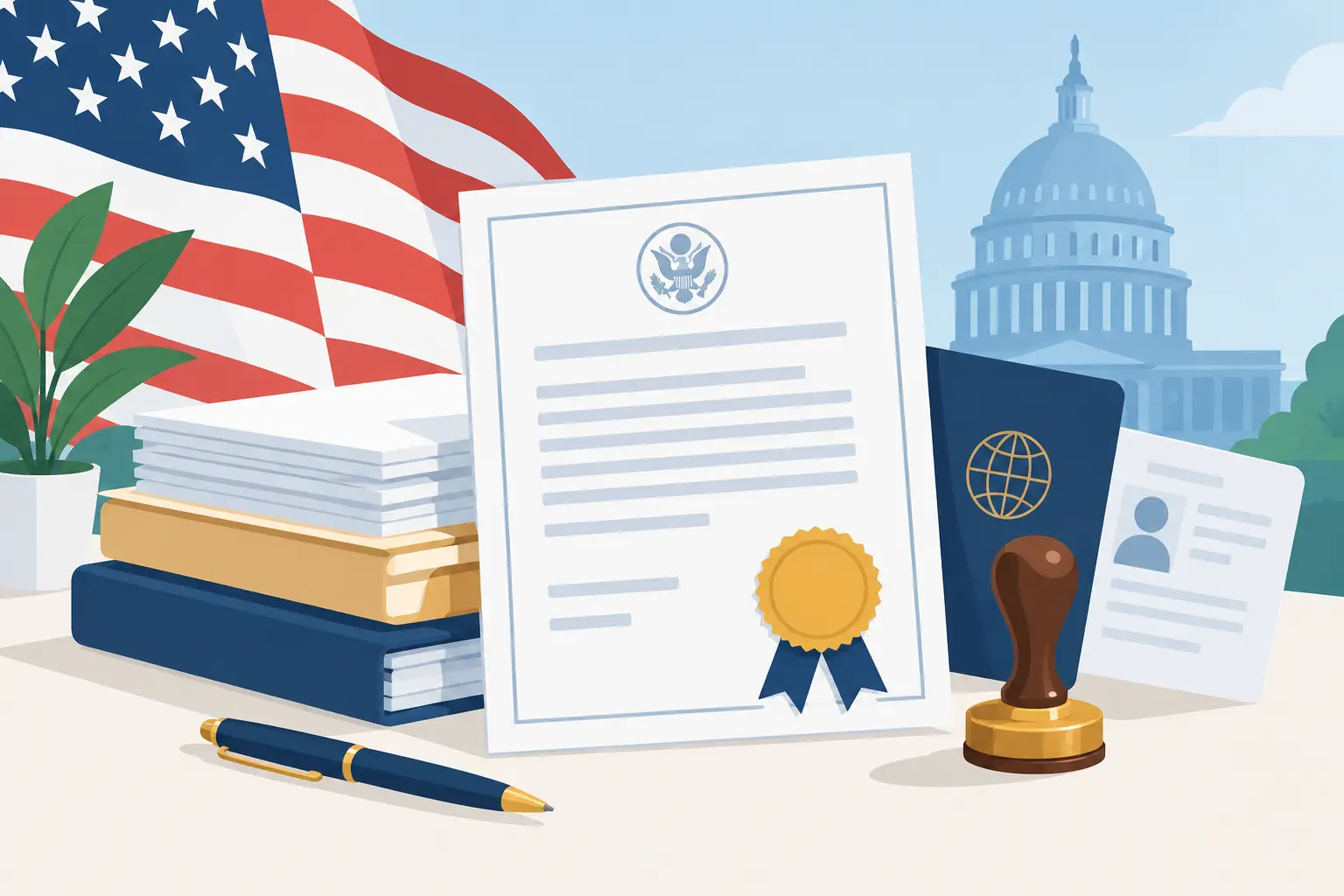
A filing can be complete, translated, and still be rejected because the certification is missing, incomplete, or intended for a different purpose. For people managing immigration, court, education, healthcare, or international business requirements, understanding the top documents needing certification can prevent avoidable delays and repeat submissions.
In language services, “certified” most often refers to a certified translation: a complete translation delivered with a signed statement attesting that it is accurate and that the translator or translation provider is qualified to complete the work. That is different from notarization and an apostille. The distinction matters because the receiving organization, not the document owner, sets the standard.
Before requesting a translation, ask the agency, school, court, employer, or other recipient what it requires. Some organizations accept a certified translation with a statement of accuracy. Others also request notarization, a copy of the original document, a sealed evaluation, or an apostille for the original record.
A notarization generally verifies the identity of the person signing a certification statement. It does not verify that the translation itself is accurate. An apostille is an authentication used for certain public documents presented across national borders by countries that participate in the Hague Apostille Convention. It is typically attached to the original document or a certified copy, not to the translation.
Requirements also vary by use case. A university may accept a certified transcript translation but require a separate credential evaluation. A court may have formatting, declaration, and deadline rules. An immigration filing may require every stamp, seal, handwritten note, and visible entry to be translated, even when those details appear minor.
The documents below are among the most common records that need certified translation in the United States. Whether certification is required depends on the destination and purpose, but these are records where precision and a formal translator statement are frequently expected.
Birth certificates, marriage certificates, divorce decrees, death certificates, and adoption records are central to many immigration and family-based applications. Foreign-language passports, national identity cards, police certificates, household registries, and name-change records may also be needed.
These documents often contain names, dates, registry numbers, official seals, and place names that must be reproduced carefully. A small inconsistency between a translated birth certificate and a passport can raise questions during a time-sensitive review. Translators should preserve the document’s structure where practical and translate all material content, including annotations and stamps.
Students, researchers, licensed professionals, and relocating families regularly need certified translations of diplomas, degree certificates, transcripts, course descriptions, training certificates, and professional licenses. Employers may also request translated résumés, certificates of employment, or letters verifying work history.
Academic terminology requires more than word-for-word conversion. Grade scales, program names, credit systems, and honors can have different meanings across countries. A certified translation should accurately state what appears in the original without independently converting grades or declaring a U.S. degree equivalent. When equivalency is required, the recipient may ask for a separate evaluation from a credential-evaluation provider.
Certified translation is often appropriate for contracts, affidavits, powers of attorney, judgments, witness statements, deposition exhibits, divorce filings, wills, and probate records. Attorneys and courts need language that is faithful to the source, consistent across related records, and handled confidentially.
Legal documents present a particular trade-off: speed matters, but terminology cannot be guessed. A term that appears routine in one legal system may not have a direct U.S. equivalent. A qualified legal translator can retain the source meaning and use clear terminology rather than forcing a misleading match. For litigation or official proceedings, confirm whether the court requires a particular certification statement, translator declaration, or notarization.
Medical histories, vaccination cards, lab reports, discharge summaries, prescriptions, consent forms, and specialist reports may need certified translation for immigration exams, continuity of care, insurance matters, disability claims, or international treatment.
Accuracy in this category supports patient safety. Medication names, dosages, diagnoses, test results, and physician instructions must be rendered precisely. Healthcare organizations should also protect patient information throughout the translation process and share only the records necessary for the stated purpose.
Organizations working across borders may need certified translations of articles of incorporation, business registrations, certificates of good standing, tax records, financial statements, audit reports, patents, product documentation, and government-issued permits.
In regulated settings, terminology consistency can affect compliance and credibility. For example, pharmaceutical, manufacturing, and public-sector documentation may require translators with relevant subject-matter knowledge as well as strong language credentials. A generic translation approach can introduce ambiguity where technical wording carries legal or operational consequences.
Not every translated document needs a certification statement. Internal presentations, marketing materials, informal correspondence, training resources, and many website translations may require professional quality without formal certification. In those cases, the priority may be brand voice, cultural adaptation, readability, or fast collaboration with internal teams.
Still, it is wise to ask before assuming. An employer may initially request a translated résumé informally, then ask for certified supporting credentials during onboarding. A hospital may use translated patient-facing materials without certification but need certified records when reviewing a foreign medical history. The practical question is not whether a document seems official. It is whether the recipient requires a formal assurance of translation accuracy.
Clear source files make accurate translation faster and reduce clarification requests. Whenever possible, provide a high-resolution scan or legible photo of every page, including blank backs when they contain seals, registration marks, or annotations. Do not crop edges or obscure handwritten entries.
Before submitting files, identify the target language, the receiving organization, the deadline, and whether the translation needs certification, notarization, or both. If names have different spellings across documents, point that out. The translator must accurately reproduce the source text, but knowing the broader document set can help maintain consistent treatment of names, addresses, and repeated institutional terms.
For a smoother request, include these details:
Never alter a source document before translation to make it appear more current or favorable. If a record contains an error, an outdated name, or a hard-to-read entry, the appropriate response may be an official correction, an explanatory document, or guidance from the receiving organization. Translation should faithfully represent the record, not change it.
Certified document translation is not simply a language task. It is a submission requirement tied to deadlines, personal records, confidential information, and potentially life-changing decisions. Look for native-language professionals, experience with your document category, careful quality review, and a clear certification statement that matches the recipient’s expectations.
For complex or high-volume needs, a language partner should also be able to coordinate consistent terminology across documents, support secure file handling, and offer realistic turnaround options without sacrificing accuracy. Lenguae supports certified document translation across more than 50 language options, with specialized language support for legal, healthcare, education, government, and relocation needs.
When the destination’s requirements are unclear, get written guidance from the recipient before work begins. Then share complete, readable files with a qualified provider. That small step helps turn a stressful paperwork requirement into a submission you can send with confidence.
Send us your documents
now and we will get back to
you with a free quote!
"The methodology, material and excellent teachers make Lenguae the best option for the personalized of English, as the learning.”
This guide to translation quality assurance explains how expert review, terminology control, and secure workflows protect high-stakes communication well.
Read more
Pharmacovigilance translation services support clear, compliant safety reporting across languages, protecting patients and helping teams meet deadlines.
Read more
Human versus machine translation affects accuracy, privacy, cost, and speed. Learn when expert linguists protect your most important communication needs.
Read more
Get immigration translation results you can trust with certified document translations that protect meaning, meet USCIS needs, and keep cases moving.
Read more
Medical consent translation protects patient choice, supports informed care, and helps providers communicate clearly across languages and cultures safely.
Read more
Lenguae aims to teach language in a comprehensive way. With our courses, you will learn to understand and express yourself in both in writing and speaking, while also getting in touch with the culture of the countries that speak the language you’re learning. All our teachers are experienced in language teaching, being either native speakers or having lived abroad.
Career at Lenguae
