
A Guide to Multilingual Employee Onboarding
A guide to multilingual employee onboarding helps HR teams deliver clear, compliant training, protect privacy, and build belonging from day one for all.
Read more
A front-desk employee may know enough Spanish to greet a visitor but not enough to explain a billing policy. A nurse may recognize common medical terms but hesitate when a patient asks a detailed question. These are the moments when language training becomes more than a professional development benefit. It becomes a practical way to improve access, trust, safety, and participation.
For organizations, the goal is not to turn every employee into a fluent speaker overnight. It is to build useful communication skills for the real interactions employees handle every day. For individuals, the goal may be career growth, a smoother relocation, stronger classroom participation, or the confidence to manage daily life in a new language.
Effective instruction starts with a clear purpose. A general conversational course can be a good fit for an employee preparing for an international assignment or an individual who wants to communicate more comfortably while traveling. It may not be enough for a healthcare practice serving patients with limited English proficiency, a legal team working with multilingual clients, or a government office that must provide accessible public services.
The strongest language programs connect lessons to the situations learners actually face. That could mean practicing appointment scheduling, workplace introductions, safety instructions, customer service conversations, school-family communication, or presentations to international colleagues. Vocabulary matters, but language learners also need to understand tone, cultural expectations, and how to ask for clarification when the stakes are high.
A well-designed program helps learners do three things: communicate their intended meaning, recognize when they do not understand something, and respond appropriately without guessing. That last point is especially important in healthcare, legal, immigration, and public-sector settings. Training can improve everyday communication, but it should not be treated as a replacement for a qualified interpreter when accurate, complete communication is required.
One course format does not serve every learner or organization. The right approach depends on who needs training, which language is involved, how quickly skills are needed, and what happens if communication breaks down.
Corporate language programs often work best when they focus on job-specific tasks. A manufacturing team may need language for equipment, shift handoffs, and safety procedures. A customer support department may need phrases for resolving common concerns while knowing when to transfer a complex call. Managers may need help giving feedback clearly across language and cultural differences.
For these groups, short sessions with repeated practice can be more valuable than a broad academic curriculum. Learners should leave class able to use new language at work that same week. Role-play, guided conversations, and materials built around actual workflows make that possible.
Healthcare providers and social-service organizations need a particularly careful approach. Staff members can benefit from learning greetings, comfort phrases, basic navigation language, and culturally respectful ways to welcome patients and families. Training can also help teams understand how to work effectively with professional interpreters.
However, employees should never be placed in the position of interpreting diagnoses, consent forms, treatment risks, legal rights, or other critical information beyond their demonstrated proficiency. The distinction protects patients, providers, and organizations. Language skills expand connection; qualified interpreting protects accuracy in high-stakes conversations.
Educational settings often need training in both directions. English learners may need practical English for participating in class, communicating with teachers, or preparing for employment. Educators and staff may benefit from training that helps them greet families, explain routine processes, and create a more welcoming environment for multilingual communities.
The most useful programs recognize that confidence affects participation. A learner who worries about making a mistake may stay silent even when they understand the material. Supportive instruction creates space to practice, ask questions, and build skills gradually.
For an individual learner, flexibility is often decisive. A working professional may only have time for evening online sessions. A relocating family may need instruction that addresses housing, school enrollment, transportation, and workplace communication rather than textbook scenarios. Someone preparing for a new role may need focused business English, while another learner may need conversational Spanish for community connections.
Private or small-group training can move quickly because instruction responds directly to the learner’s goals. Group classes can offer valuable practice and encouragement at a more accessible cost. Neither option is automatically better. The choice depends on schedule, budget, comfort level, and the degree of personalization required.
Organizations sometimes invest in language classes only to see attendance fall after the first few weeks. The usual problem is not a lack of interest. It is a mismatch between course design and employees’ schedules, responsibilities, or immediate needs.
Start with a short needs assessment. Ask which languages employees use or encounter, what conversations create the most difficulty, and which roles have the greatest need. Review common documents, customer questions, service points, and recurring misunderstandings. This gives the training provider a concrete foundation for course content and placement.
Next, set a realistic outcome. “Become fluent” is not a useful program objective for a 10-week course. “Handle a basic intake conversation,” “explain standard safety procedures,” or “participate confidently in routine team meetings” gives learners a clear target and gives managers a way to evaluate progress.
Delivery also matters. Remote language training can serve distributed teams and reduce travel time. In-person instruction can be especially useful for groups that benefit from live practice or do not spend their workday at a computer. Some employers use a blended format, combining instructor-led sessions with guided practice between classes. The best format is the one learners can attend consistently and apply immediately.
Managers have a role as well. When leaders allow time for training, recognize progress, and avoid treating bilingual employees as unpaid interpreters, they signal that language learning is a respected part of the workplace. That support improves participation and helps prevent well-meaning staff from taking on communication responsibilities beyond their skills.
Course quality depends heavily on the instructor and program design. Native or near-native fluency alone is not enough. Instructors should know how to teach adults, adjust to different proficiency levels, and explain cultural context without relying on stereotypes. For specialized settings, they should also understand the terminology and communication boundaries that matter in that field.
A dependable provider will ask questions before recommending a course. They should be prepared to discuss class size, learner levels, scheduling, privacy expectations, subject-specific vocabulary, and how progress will be measured. They should also be clear about where training ends and professional translation or interpreting services begin.
This broader perspective matters for organizations with multiple language needs. A hospital may require staff training, patient-document translation, and qualified interpreters. A law firm may need bilingual client communication coaching while relying on certified translations and legal interpreters for formal matters. Coordinating these services through an experienced language partner can reduce confusion and create more consistent communication practices.
Lenguae provides flexible online and in-person language courses alongside translation and interpretation support, helping organizations and individuals choose the right service for each communication need. The focus remains practical: clear instruction, culturally aware communication, and solutions that fit real schedules and budgets.
Language learning is gradual, so progress should be measured in practical terms. Early gains may look small: a learner confidently greets a client, understands a routine instruction, or completes a short conversation without switching languages. Those moments matter because they create momentum.
Use brief check-ins throughout the program rather than waiting until the final session. Instructors can assess speaking, listening, comprehension, and comfort with relevant scenarios. Organizations can also watch for operational results, such as fewer avoidable misunderstandings, better client interactions, or improved employee engagement.
The aim is not perfection. It is dependable communication within a defined context, combined with good judgment about when to bring in qualified language professionals. When learners have the right support, every conversation becomes an opportunity to serve people with greater clarity and respect.
Send us your documents
now and we will get back to
you with a free quote!
"The methodology, material and excellent teachers make Lenguae the best option for the personalized of English, as the learning.”
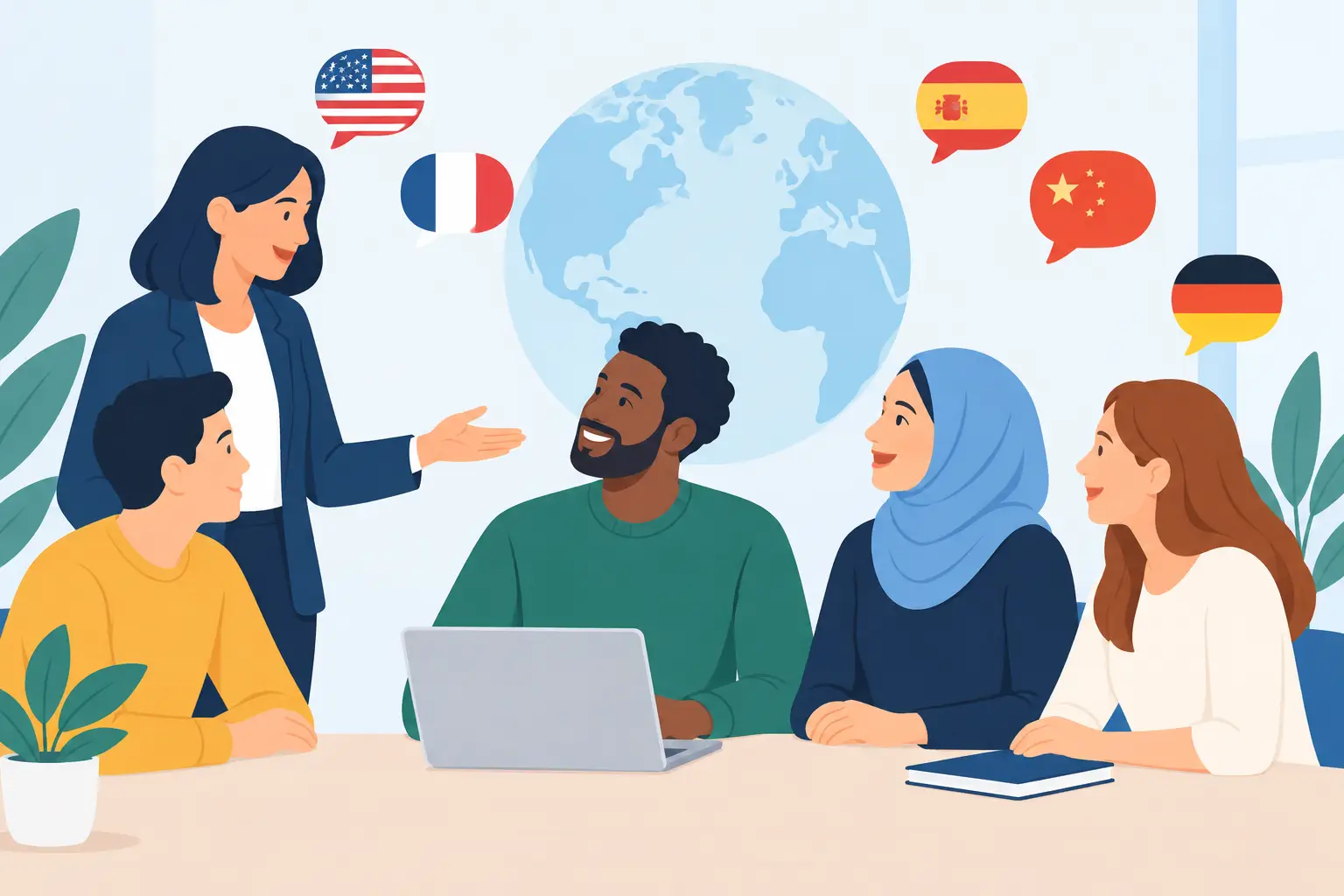
A guide to multilingual employee onboarding helps HR teams deliver clear, compliant training, protect privacy, and build belonging from day one for all.
Read more
A guide to international document legalization: understand apostilles, authentication, certified translations, and filing steps before you submit abroad.
Read more
Compare remote versus onsite interpreting for healthcare, legal, government, and business needs. Choose the right format for accuracy, privacy, and access.
Read more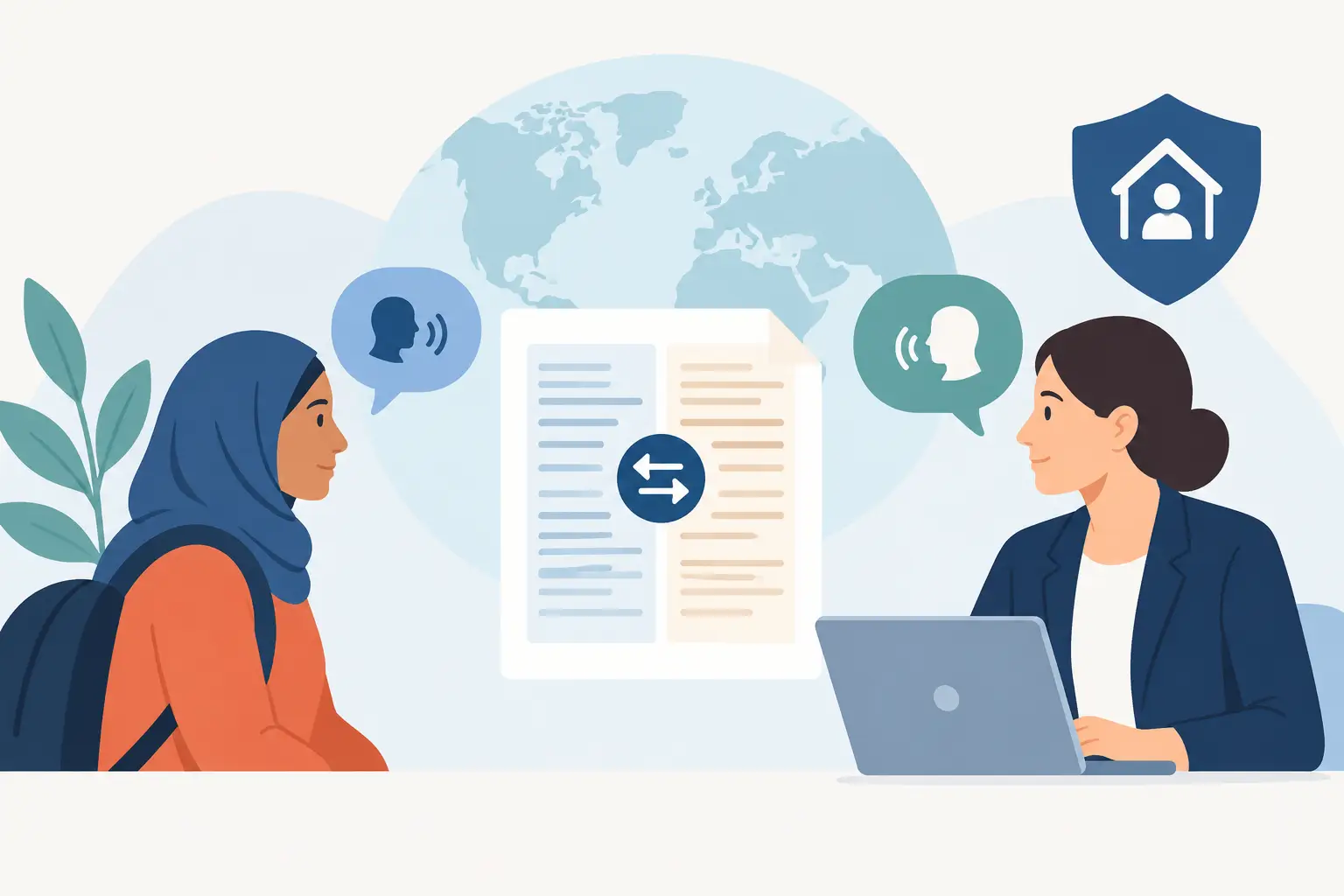
See what an asylum translation example should include, from translator certification to faithful wording, dates, seals, and document formatting for USCIS.
Read more
A legal deposition interpreter protects accurate testimony, confidentiality, and due process across languages. Learn what deposition support requires.
Read more
Lenguae aims to teach language in a comprehensive way. With our courses, you will learn to understand and express yourself in both in writing and speaking, while also getting in touch with the culture of the countries that speak the language you’re learning. All our teachers are experienced in language teaching, being either native speakers or having lived abroad.
Career at Lenguae
