
Apostille Translation Requirements Explained
Understand apostille translation requirements, when certified or notarized translations are needed, and how to prepare documents correctly for use abroad.
Read more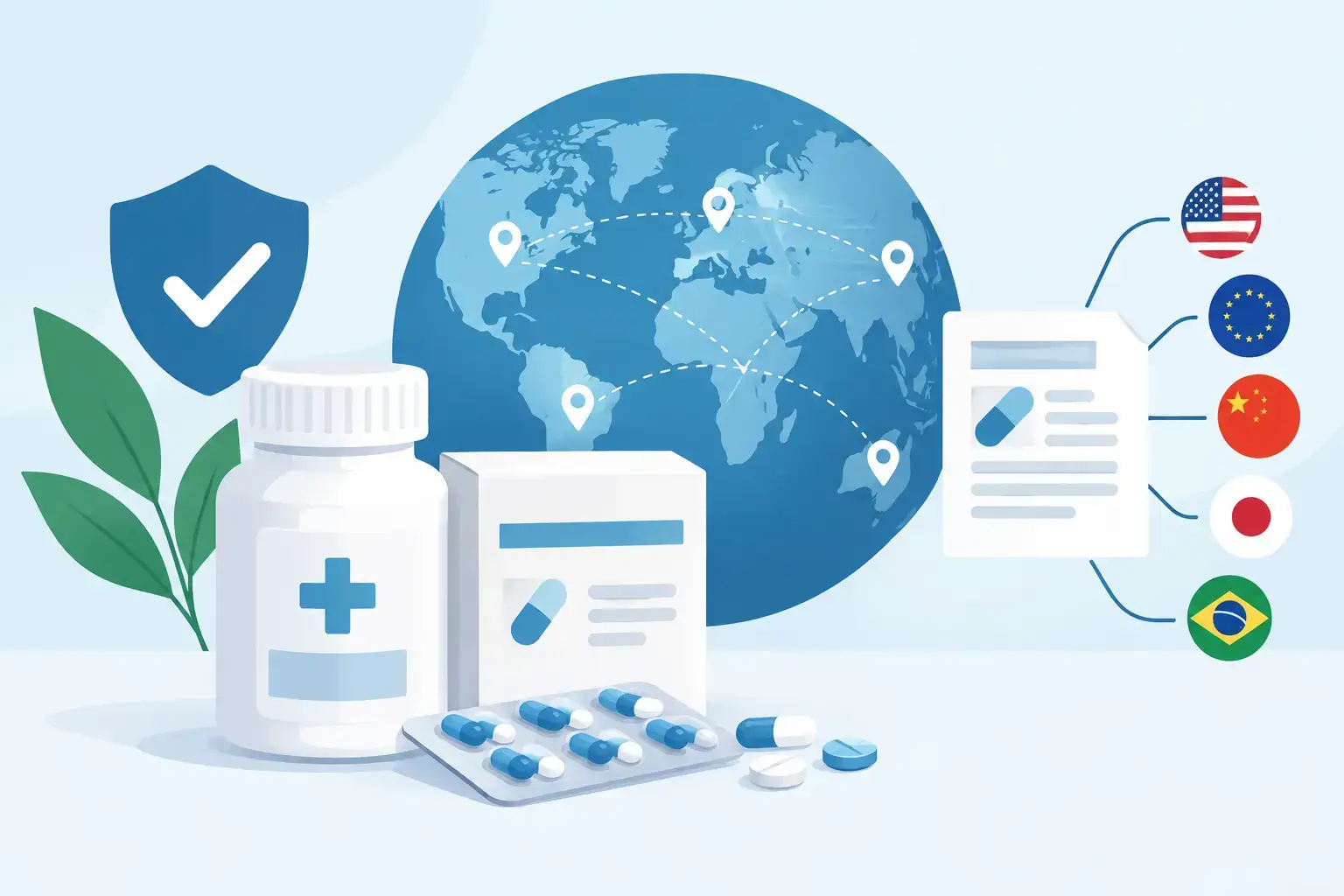
A dosage instruction that is technically translated but formatted incorrectly can still create a patient-safety risk. That is the central challenge in learning how to localize pharmaceutical labeling: the work is not limited to converting words from English into another language. It requires preserving regulated meaning, managing market-specific requirements, protecting the source files, and making critical information clear to the people who will use the product.
For pharmaceutical manufacturers, distributors, clinical research organizations, and healthcare partners, labeling localization deserves the same disciplined process applied to product quality. A reliable workflow helps reduce delays, supports regulatory submissions, and gives patients and healthcare professionals information they can understand with confidence.
Pharmaceutical labeling includes more than the text printed on a carton. Depending on the product and market, it may include container labels, blister packaging, prescribing information, medication guides, instructions for use, patient leaflets, storage statements, safety warnings, tamper-evident instructions, and electronic labeling content.
Each document has a different audience and level of risk. A physician needs precise clinical terminology and dosing details. A patient may need plain, culturally appropriate wording that makes administration steps and warning signs easy to follow. A pharmacist needs unambiguous information about strength, route of administration, lot numbers, storage, and expiration dates.
Translation alone does not resolve these needs. Localization accounts for the target market’s language conventions, measurement systems, date formats, regulatory terminology, typography, available label space, and cultural expectations. A phrase that works on a US package may be inaccurate, unclear, or noncompliant in another market.
Before assigning any content for translation, define where the product will be distributed and which labeling materials are in scope. Requirements vary by country, region, product type, and whether the medicine is prescription, over-the-counter, investigational, or intended for a specialized healthcare setting.
Your plan should identify the source documents, target languages, intended audience, delivery formats, and review responsibilities. It should also clarify which content is fixed by approved source labeling and which content may require local adaptation. For example, a safety statement may need an approved translated equivalent, while a customer service phone number, reporting instruction, or distributor address may need market-specific replacement.
This early planning prevents a common and costly problem: translating artwork before regulatory, medical, and commercial stakeholders agree on the final source text. Every late source-language revision can trigger translation updates, formatting changes, quality checks, and another review cycle across multiple languages.
A practical labeling strategy distinguishes global core content from local market content. Core content often includes approved indications, contraindications, active ingredients, dosage forms, and safety statements. Local content may include country-specific regulatory numbers, importer information, reimbursement language, local adverse-event reporting instructions, or required recycling symbols.
The exact split depends on the market. Treating every word as globally identical can create compliance problems, but allowing uncontrolled local edits can compromise the approved product message. The goal is controlled flexibility with a documented approval path.
Pharmaceutical terms are rarely interchangeable. A medication’s dosage form, route of administration, pharmacological class, or adverse reaction terminology must remain consistent across labels, instructions for use, promotional materials, and safety documentation.
Create an approved multilingual glossary before the full project begins. It should include product names, active ingredients, excipients, dosage units, medical abbreviations, administration terms, warning language, anatomical terms, and required regulatory phrases. The glossary should state the preferred translation, prohibited variants, context, and source of approval.
Translation memory can also improve consistency across recurring labeling updates. It stores approved segments so that repeated statements, warnings, and standard instructions can be reused carefully. This can reduce cost and turnaround time, but it does not replace human judgment. A sentence that appears identical may have a different meaning when its product, dosage form, or placement changes.
Pharmaceutical labeling should be handled by professional translators with demonstrated expertise in life sciences and the relevant target language. Native-language proficiency matters because a medically accurate phrase can still sound unnatural, ambiguous, or overly technical to a patient audience.
The strongest review process includes more than one perspective. A linguist verifies meaning, grammar, terminology, and readability. A subject-matter reviewer may confirm medical and product-specific accuracy. Regulatory or local affiliates can verify that market requirements and approved wording have been met.
Not every project needs the same number of review layers. A low-volume update to an established, previously approved label may follow a streamlined process. A new product launch, a high-risk warning update, or a submission package generally calls for deeper review and more formal documentation. The appropriate level of control depends on risk, regulatory expectations, and your internal quality system.
Text expansion is one of the most visible challenges in pharmaceutical labeling. English is often more compact than languages such as German, French, Spanish, or Portuguese. A translated warning may require substantially more space, yet the label must still accommodate mandatory elements, legibility standards, barcodes, symbols, and brand requirements.
Plan for desktop publishing and artwork adaptation as part of the localization scope. The linguist should review the final formatted file, not just a document extracted from the artwork. This linguistic quality assurance step can catch truncated sentences, missing text, incorrect line breaks, swapped numbers, wrong units, and warnings placed next to the wrong product variant.
Formatting choices can change meaning. A decimal separator, a superscript character, a unit abbreviation, or a line break in a dosage instruction deserves close attention. The same is true for right-to-left languages, non-Latin scripts, and labels with very limited printable space. If a required translation cannot fit clearly, the answer is not simply to reduce the font until it is difficult to read. The artwork and content strategy may need to be reconsidered.
Pharmaceutical labeling projects often contain confidential product information, unreleased launch details, clinical data, and proprietary manufacturing information. Use a language partner with clear confidentiality practices and secure file-handling procedures. Access should be limited to the people who need it, and project files should be managed in controlled environments.
Version control is equally important. Teams should know which source label is current, which translation is approved, what changed, who approved it, and where the final artwork is stored. Without this discipline, an outdated warning or old product specification can reappear during a later packaging update.
A change log helps reviewers focus on what actually changed. Instead of asking every reviewer to recheck an entire label after a minor revision, provide marked source changes and explain whether they affect terminology, layout, regulatory content, or only administrative details. This approach supports faster turnaround without treating review as optional.
A label can pass a linguistic review and still confuse its intended audience. When patient comprehension is central, consider usability testing, cognitive review, or feedback from in-market healthcare professionals. This is especially useful for instructions involving injection devices, pediatric dosing, storage conditions, emergency warnings, and complex administration schedules.
Testing is not a substitute for regulatory review, and it is not required for every labeling project. It is most valuable when the cost of misunderstanding is high or when a product is intended for people with limited health literacy. Findings may reveal that a term is technically correct but unfamiliar, an instruction sequence is unclear, or visual hierarchy does not direct attention to the most urgent safety information.
A language provider should be able to work within your quality process rather than asking your team to adapt to a generic translation workflow. Ask how translators are selected, how terminology is managed, whether formatted files receive linguistic review, how confidentiality is protected, and how urgent label changes are handled.
For organizations managing multiple markets, it also helps to have one coordinated partner for multilingual labeling, related clinical documents, healthcare interpretation, and certified translations. Lenguae supports specialized language needs with native human linguists, flexible delivery options, and careful attention to terminology, confidentiality, and practical timelines.
The best localized label does more than meet a requirement. It gives a clinician, pharmacist, caregiver, or patient the information they need at the moment it matters. Begin with approved source content, involve qualified reviewers early, and give localization the space, oversight, and respect that patient communication requires.
Send us your documents
now and we will get back to
you with a free quote!
"The methodology, material and excellent teachers make Lenguae the best option for the personalized of English, as the learning.”

Understand apostille translation requirements, when certified or notarized translations are needed, and how to prepare documents correctly for use abroad.
Read more
Learn how to use video interpreting for healthcare, legal, education, and public services with clear steps that protect accuracy, privacy, and access.
Read more
Learn how to translate immigration forms accurately, prepare a USCIS-ready certification, and protect sensitive documents with qualified expert support.
Read more
This guide to contract translation workflows helps legal, business, and public-sector teams protect meaning, confidentiality, deadlines, and compliance.
Read more
Medical interpreter qualifications support accurate, confidential care, reduce risk, and help patients understand their options and next steps safely.
Read more
Lenguae aims to teach language in a comprehensive way. With our courses, you will learn to understand and express yourself in both in writing and speaking, while also getting in touch with the culture of the countries that speak the language you’re learning. All our teachers are experienced in language teaching, being either native speakers or having lived abroad.
Career at Lenguae
