
Pharmacovigilance Translation Services Explained
Pharmacovigilance translation services support clear, compliant safety reporting across languages, protecting patients and helping teams meet deadlines.
Read more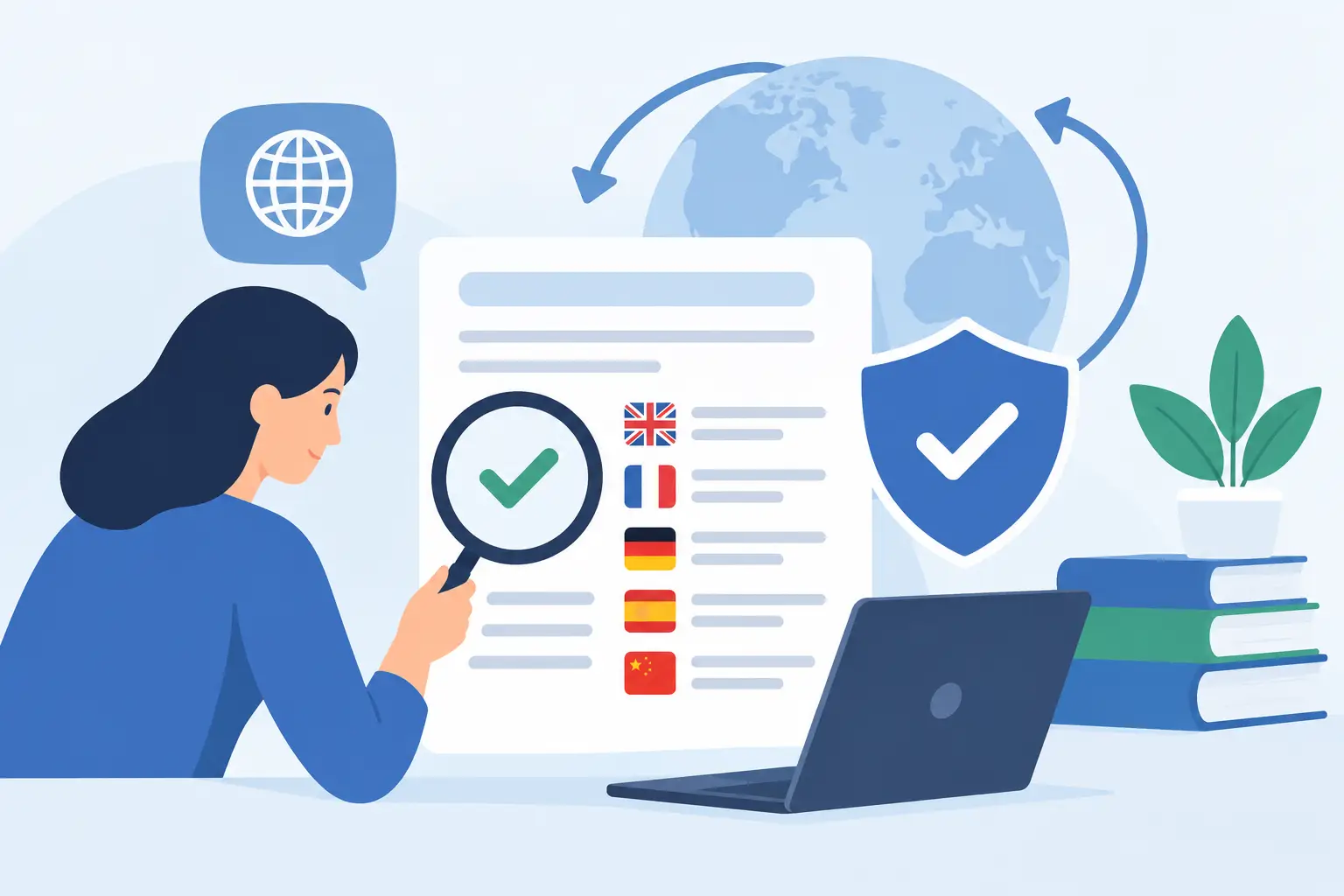
A consent form with one mistranslated risk, an immigration certificate with an incorrect date, or a contract that changes an obligation by a single word can create consequences far beyond awkward wording. A reliable guide to translation quality assurance starts there: quality is not simply whether a document sounds natural. It is whether the translated content remains accurate, complete, appropriate for its audience, and fit for the decision it supports.
For healthcare providers, law firms, government offices, schools, and global businesses, translation quality assurance is a practical risk-control process. It protects patient understanding, legal meaning, privacy, regulatory compliance, and the confidence people place in your organization.
Translation quality assurance, often called TQA, is the structured process used to verify that a translation meets agreed requirements before delivery. It combines qualified human judgment with targeted technology and a workflow built around the document’s purpose.
A spellcheck alone cannot confirm that a medication instruction is clinically accurate, that a court filing preserves legal intent, or that a certified translation faithfully reflects every seal, signature, and handwritten note in the source. Those tasks require translators and reviewers who understand both languages and the subject matter.
Quality also depends on the use case. A public-facing training guide should be clear, culturally appropriate, and easy to follow. A legal exhibit may need a highly literal rendering that preserves the source format and wording. A marketing campaign has more room to adapt tone, but it still must communicate the brand’s intended message. The right standard is not identical for every project.
Many quality problems begin before translation starts. If a provider receives only a file and a deadline, they must make assumptions about audience, terminology, format, and intended use. Those assumptions can be costly in high-stakes settings.
A strong project brief identifies the target language and locale, the document’s purpose, the intended reader, required turnaround, and any compliance or certification needs. It should also flag sensitive content, such as protected health information, legal strategy, employee data, or unpublished research.
For example, Spanish for a patient population in Connecticut may require different language choices than Spanish intended for a government campaign in Puerto Rico or a workforce communication in Mexico. The goal is not to declare one form of Spanish better than another. It is to choose language that is understandable and appropriate for the people who will use it.
When available, provide approved glossaries, prior translations, style guidance, and reference materials. These resources help preserve consistency across recurring documents, whether you are translating patient discharge instructions, product labels, university notices, or employee policies.
The most dependable approach prevents errors instead of relying on a final rescue step. A well-managed workflow assigns the right linguists, keeps source materials organized, establishes communication channels for questions, and reviews work against project-specific requirements.
Native-level fluency is essential, but it is only one part of translator qualification. A linguist handling pharmaceutical documentation needs familiarity with clinical and regulatory terminology. A legal translator must recognize how terminology can affect rights, obligations, and procedural meaning. An interpreter or translator supporting immigration matters must understand the formal requirements that may apply to certified documents.
Specialization matters because words do not always carry the same meaning across industries. “Disposition,” “consideration,” “positive,” and “discharge” can mean very different things in legal, financial, medical, and everyday contexts. Subject-matter expertise reduces the likelihood that a linguistically plausible phrase becomes a substantive error.
Terminology control is especially valuable when documents are translated over time by more than one qualified linguist. A glossary sets the preferred translation for approved terms, product names, department names, technical phrases, and recurring instructions. It also records terms that should remain untranslated.
Consistency helps readers trust the content and reduces confusion. If a hospital alternates among several translations for the same department, patients may struggle to follow directions. If a company translates a product feature differently across manuals, training materials, and support articles, the result can increase service calls and safety risks.
A glossary should not become a rigid substitute for judgment. Terms may need adjustment when grammar, context, or regional usage requires it. The translator should have a clear process for raising those questions rather than silently applying a term that does not fit.
For material where accuracy carries significant consequences, a second qualified linguist should review the translation independently. This reviewer compares the source and target text for meaning, omissions, numbers, dates, names, formatting, terminology, grammar, and readability.
Independent review is valuable because translators can become too familiar with their own wording to spot an overlooked detail. A fresh reviewer is more likely to notice that “daily” became “weekly,” a decimal point shifted, a negation was missed, or a heading does not match the section below it.
The level of review should reflect the risk. A short internal message may need an efficient linguistic check. Consent forms, legal agreements, safety instructions, clinical trial materials, and documents submitted to authorities generally warrant a more rigorous review process. Faster delivery is possible, but speed should be planned through staffing and workflow, not achieved by skipping necessary controls.
Translation technology can improve consistency and efficiency when it is used appropriately. Translation memory tools help approved phrases reappear consistently in later projects. Terminology databases prompt linguists to use preferred terms. Automated quality checks can identify missing numbers, inconsistent terminology, extra spaces, broken tags, and segments that may not have been translated.
These tools are useful safeguards, particularly for large or repetitive document sets. They cannot determine whether a sentence accurately reflects a patient’s real-world instructions, whether a legal phrase has the correct jurisdictional meaning, or whether a message is respectful in a specific cultural context.
Machine-generated translation may be useful for low-risk internal comprehension when an organization has approved its use. It requires careful evaluation before it is used for public, legal, healthcare, immigration, or regulated content. Confidentiality is another consideration: uploading sensitive files to unapproved systems can create privacy and data-security concerns. For high-stakes communications, human expertise and secure handling should remain central.
A quality review should look beyond sentence-level fluency. The following issues regularly create avoidable errors in translated documents:
These checks are not administrative extras. They are part of protecting meaning from the first page to the last.
Organizations with recurring translation needs benefit from treating quality as an ongoing partnership rather than a one-time inspection. Track corrections, recurring terminology questions, missed formatting issues, turnaround performance, and stakeholder feedback. Patterns reveal whether a problem comes from unclear source writing, an incomplete glossary, a workflow gap, or an incorrect translator assignment.
Client feedback should be evaluated carefully. A bilingual employee may prefer a different word choice, while the translation may still be accurate for the intended audience. At the same time, feedback from patients, field staff, local offices, or community partners can reveal a genuine clarity issue that formal review missed. The best quality programs distinguish between preference, regional variation, and factual error.
For important materials, consider pilot testing with representative readers. If people cannot understand a translated enrollment notice or follow a safety instruction, linguistic accuracy alone has not achieved the project’s goal.
Ask prospective providers how they select translators, whether reviewers work independently, how they manage terminology, and how they protect confidential files. Ask how they handle questions about unclear source text and what happens if a correction is needed after delivery. Clear answers are a good sign that quality is managed deliberately rather than promised broadly.
Also consider scope. An agency that can coordinate certified document translation, specialized written translation, and qualified remote or on-site interpretation can create more consistency across a case, patient journey, event, or organizational program. At Lenguae, that coordination is designed to help clients communicate accurately while keeping projects practical, responsive, and accessible.
Quality assurance works best when it is planned before the deadline becomes urgent. Share the document’s purpose, audience, and risk level early, and your language partner can build the right review process around what is truly at stake.
Send us your documents
now and we will get back to
you with a free quote!
"The methodology, material and excellent teachers make Lenguae the best option for the personalized of English, as the learning.”
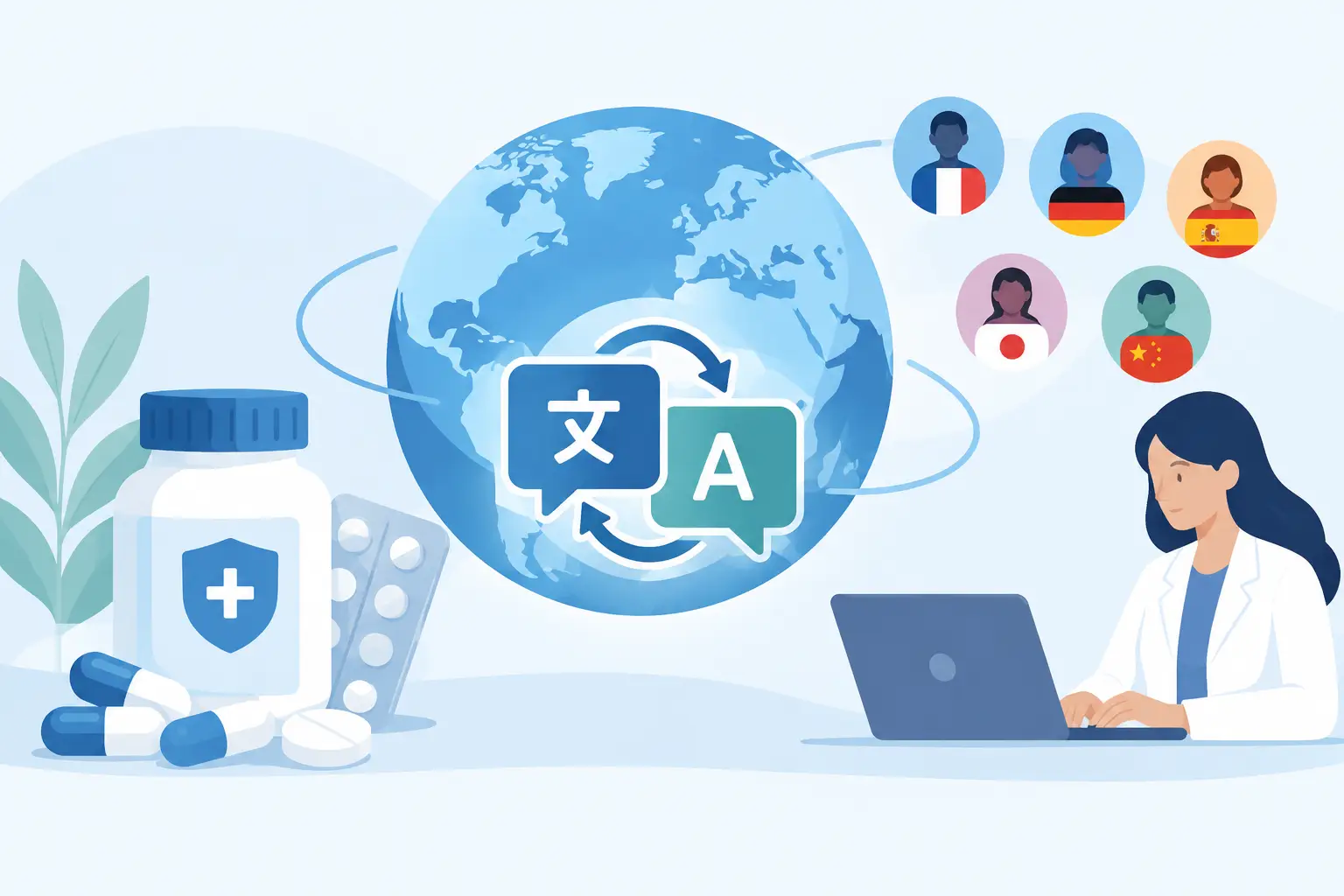
Pharmacovigilance translation services support clear, compliant safety reporting across languages, protecting patients and helping teams meet deadlines.
Read more
Human versus machine translation affects accuracy, privacy, cost, and speed. Learn when expert linguists protect your most important communication needs.
Read more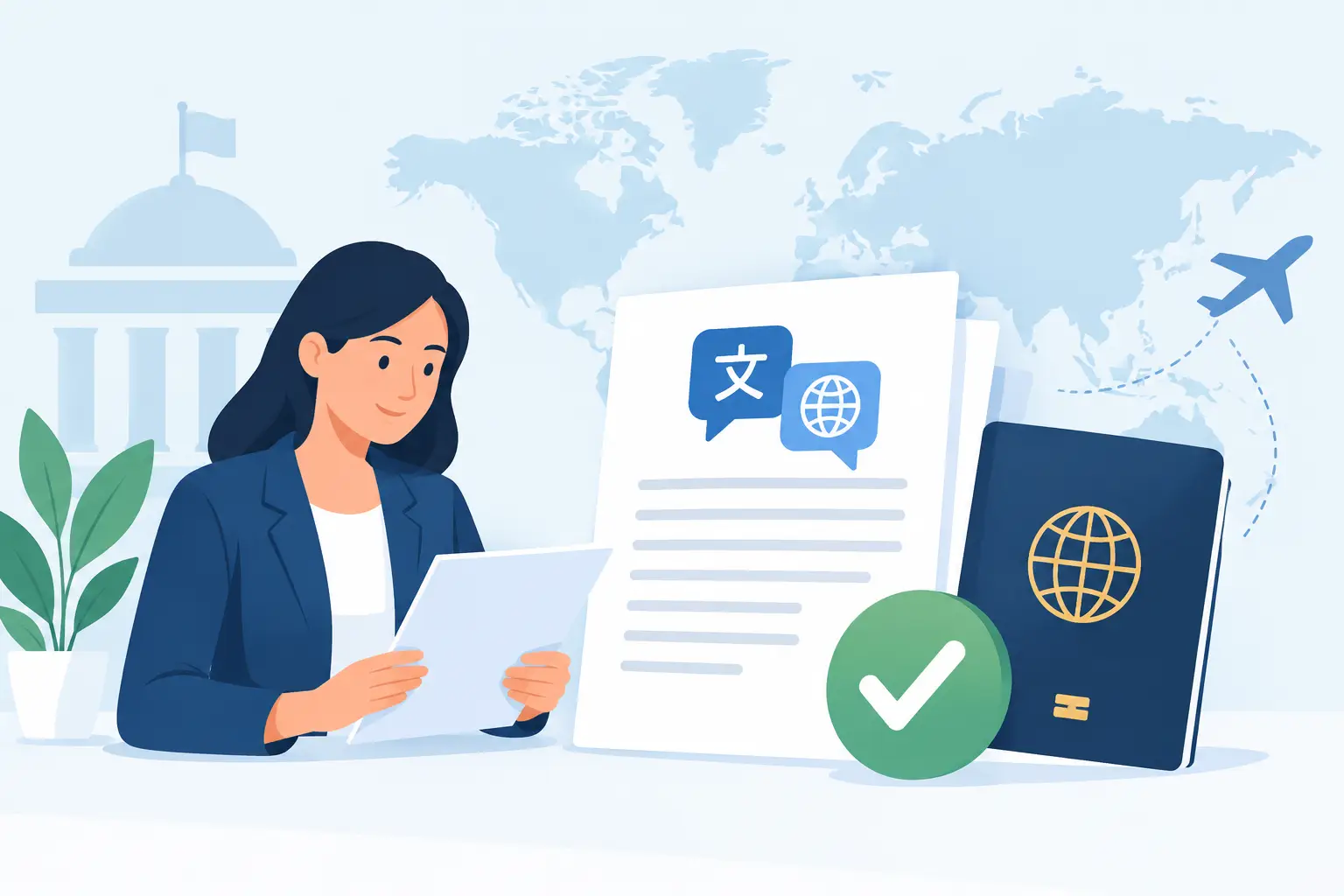
Get immigration translation results you can trust with certified document translations that protect meaning, meet USCIS needs, and keep cases moving.
Read more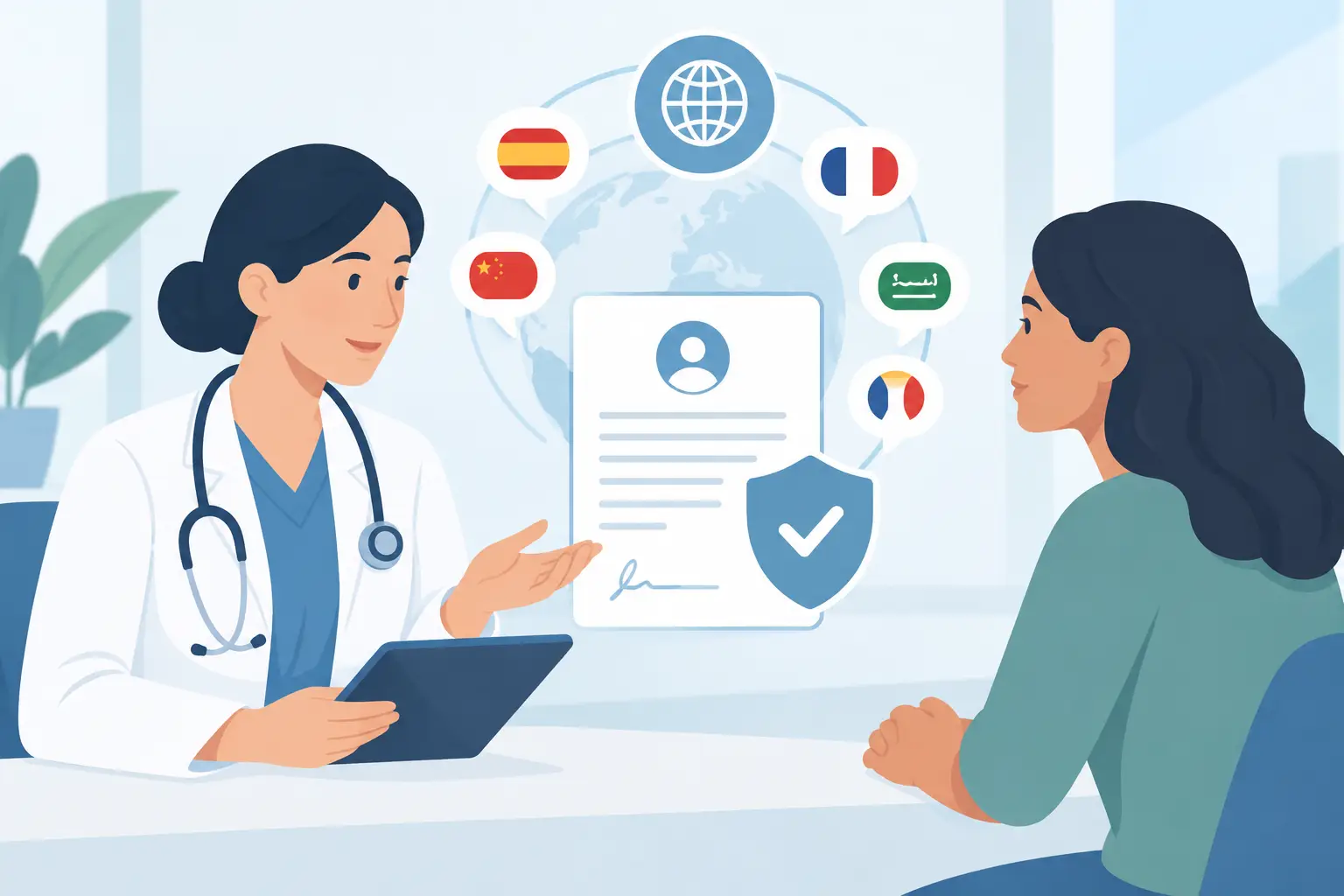
Medical consent translation protects patient choice, supports informed care, and helps providers communicate clearly across languages and cultures safely.
Read more
Conference interpreters help multilingual events run clearly and confidently. Learn how to choose the format, team, and preparation for every audience.
Read more
Lenguae aims to teach language in a comprehensive way. With our courses, you will learn to understand and express yourself in both in writing and speaking, while also getting in touch with the culture of the countries that speak the language you’re learning. All our teachers are experienced in language teaching, being either native speakers or having lived abroad.
Career at Lenguae
